For MLK Day, Liz entered an essay in an "I Have A Dream" contest at Webb Elementary and won first place! I don't think I ever got to read it — doubt that we have a copy — but it was a proud achievement for all of us. Liz continued to be wary of her white privilege the rest of her life. Perhaps the majority of her friends were people of color.
(Michael) Dell was (is) pragmatic at (his) its best. Though it was evident that the Olympic products could not be reasonably brought to market, the effort had assembled significant development groups and developed components that could be reused in products yet to be defined. One of the then significant milestones in development of a new PC was booting DOS. Once Olympic prototypes could boot DOS, it was time to suspend Olympic development and have a sense of urgency producing new but less radical products.
aside - Bus Wars: From the early mainframes to current personal computers and larger machines, there have been two inter-related questions: 1. How should peripheral devices (display, storage, networking, audio ...) be connected to the main processor(s)? and 2. How much device specific processing should be handled by processor(s) in the device? It may be oversimplistic, but I would argue there have been three commercially dominant approaches to the first question over the decades, such that the others were/are mostly not commercially significant in comparison. The first commercially dominant "bus" was the 8-bit parallel bus used in the original IBM PC and subsequently extended to 16 bits with the PC/AT (the "Industry Standard Architecture" - ISA). The 32 bit EISA extension was a stopgap, more successful than the IBM Micro Channel, but not significant commercially. By the mid-1990s, PCI (Peripheral Component Interconnect) started to become dominant and evolved to today's PCI Express. As more and more "peripherals" have become embedded in personal devices, PCI Express is primarily relevant in gaming computers and servers. The third dominant bus is the Universal Serial Bus (USB) with the many variants now ubiquitously associated with personal and other devices. I will say more about processing in peripheral devices in subsequent paragraphs.
In addition to delivering the 316LT laptop that had been shown at COMDEX, the other "leadership" priority was delivering a 486 product. Further, given the "bus wars" and Dell's previous but abandoned intentions to deliver a Micro Channel product, it seemed urgent to have an EISA product. Beyond that, the core 386 product line needed faster, less costly products. Finally, it was time for Dell to enter the server business -- server products were one of the primary goals of Olympic.
Mike O'Dell became responsible for leading expedited development of a what would be the 425E (486 25MHz EISA) desktop that was released in June and recovered Dell prominence. (Even more than the responsibility I felt at IBM, I felt responsible for frequently posting about all Dell products in Usenet groups, and answering support questions that might otherwise have gone unanswered.) As things evolved, Mike became responsible for "standard" systems (ISA desktops) and portable systems. I became responsible for "advanced" systems (EISA desktops and servers) and software, including Dell UNIX.


Most of the VLSI team for Olympic started working on less ambitious chips that would reduce cost and improve performance of desktop, server, and portable products.
While Terry Parks was looking to contribute post-Olympic, he suggested that we develop a RAID controller. Terry contributed both the hardware development and device drivers for the Dell Drive Array, one of the first commercial implementations based on A case for redundant arrays of inexpensive disks (RAID) by Patterson et al.
I remember thinking in 1989 that X-Windows was going to be the dominant windowing environment on PCs. I said about as much in “Unix – The Force Behind Personal Computing?.” When Michael read what I had written, he gently suggested I take a closer look at Windows 3.0. History shows Michael was right and I was wrong.
But before Windows 3 emerged, when Mac OS was the graphical user interface of choice in the personal computer world, Dell seemed to be the leader in X Windows for the PC, and Dell Station attempted to extend that leadership: “Dell has added IXI’s X.desktop, that provides the user with a Macintosh-like screen with icons that represent applications or functions. … The DELL Station includes a comprehensive suite of integrated office applications from Uniplex. Uniplex X Windows applications include word processing, a spreadsheet, the Informix SQL (structured query language) relational database, advanced business graphics, electronic mail and more.”
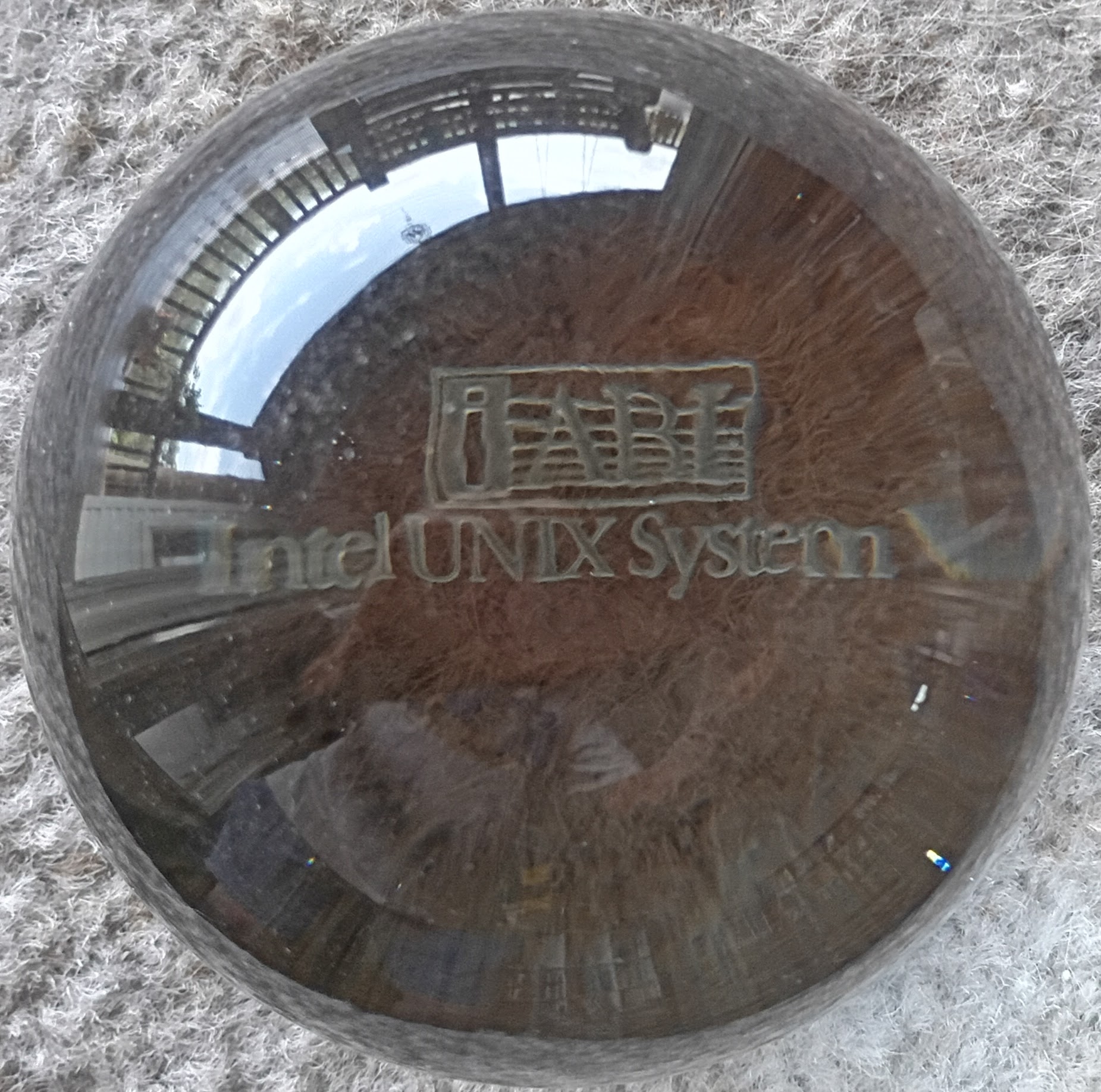
In June, AT&T, Intel, and Unix System Laboratories held an event to announce the Intel386 processor supplement of the System V Application Binary Interface. Whereas prior standards had defined compatibility at a source level, the iABI took the next step so that applications vendors could expected compiled programs to work on any system supporting the iABI definition. Michael was invited to attend, and asked me to go in his place to receive a crystal ball recognizing the event.
The growing Dell sales organization needed the elegant space Glenn's development team occupied at Arboretum Point, so we moved to adequate but much less elegant offices on West Braker Lane. Caroline, Liz, and I started thinking about moving to a new home. We were attracted to one designed by Joe Volpe and built by Brian Jackson, and eventually decided to ask Joe to design and Brian to build a similar home on our Valburn Drive lot.
Since the PC's Limited beginnings, Dell had focused on hardware and firmware techniques to achieve better performance than competitors. With servers and storage subsystems, these efforts would have much more potential for comptetive advantage. However, performance benchmarking in the PC industry had not received appropriate attention. I started trying to address the problem, publishing "Meaningful Indicators of System Performance," and beginning to work with other companies to develop industry accepted benchmarks.

In one of those "I remember where I was when I heard moments," I remember August 27, 1990 Charles Zeller coming to me in the hall outside my office to tell me that Stevie Ray Vaughan had died in a helicopter crash.
At the end of August, we were ready to launch many new products: faster laptops, better desktops, 25MHz and 33MHz 486 EISA servers, and the Dell Drive Array.
Dell's revenue is now dominated by servers. For fiscal 2027 first quarter, Infrastructure Solutions Group (servers/networking/storage) revenue was $29.0 billion, vs. $14.6 billion Client Solutions Group revenue. Using the legally correct characterization of UNIX (including Linux, et al), tracing back to the original Ritchie & Thompson creation almost 6 decades ago, the vast majority of those servers, and a small fraction of the individual machines, are using UNIX as the operating system. Our Dell server and software teams pioneered the hardware and software that has evolved to become the dominant revenue source for one of the world's most important companies.
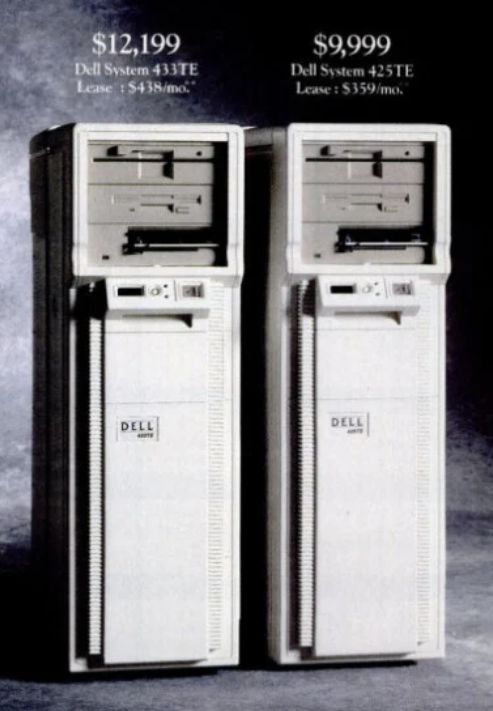
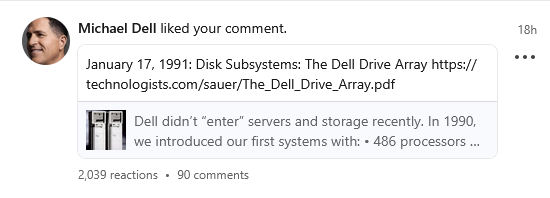
Michael has been citing some of these beginings, about the 425TE, 433TE, and Dell Drive Array, in recent social media posts: Dell didn't “enter” servers and storage recently, and a server revision of the 2001 Dude You're Getting a Dell Commercials at 2026:
2026 pic.twitter.com/TyXlFIR9f1
— Michael Dell 🇺🇸 (@MichaelDell) August 15, 2026
Liz started 5th grade back at Hill Elementary, her last year there. We took yet another vacation to Disney World.
 |
 |
 |
 |
Clay Cipione and Gary Snyder had left IBM to lead technology for LexisNexis in Dayton, Ohio. As major Dell customers, they asked Michael to visit, and asked me to be part of the visit. Rather than talk about my efforts at Dell, Clay wanted me to speak to their team about distributed system issues. Since it had been 18+ months since I had spoken on that topic, I was not well prepared and did not represent Dell or myself well. Afterwards, Michael (through Glenn) suggested I take a week long presentation training course with Communispond, which I did.

The real excitement in the UNIX development group was not Dell Station, but the first release of Dell SVR4, which was announced on Halloween 1990.
By 1991, Mike O'Dell and I had been promoted to vice-presidents of (Glenn's) Dell Product Group. Michael routinely would visit leaders of various component suppliers to be briefed on upcoming components. At some point Michael took Mike and me on one of those visits to Colorado and California. I remember meeting Finis Conner, founder of one of the then dominant disk manufacturers. Finis showed us physically tiny disks, with 1 inch and 1.8 inch platters. I don't think those ever were used in Dell products, but they probably found niche applications somewhere.
Our EISA development teams released new desktop and server systems, 4XXDE and 4XXSE, with upgradable processor cards and VGA cards that would plug into the main system boards. There may have been 20MHz and 25MHz versions, but the primary versions were 33MHz until 50MHz 450DE and 450SE versions became available in June.
 |
 |
 |
One of the challenges of building on our lot at 7123 Valburn Drive, that we did not realize when purchasing, is that the lot had been used to dump much of the rock and dirt cleared during paving of Valburn Drive. All that had been dumped needed to be removed before the foundation could be safely built. Tommy Jackson, Brian's younger brother that supervised all the work, questioned whether it would be possible to properly remove the dumpings from our steep hillside. Once the clearing started, Sammy, the front loader operator who had to actually do the work, exclaimed to Tommy "you're try to kill me." But Sammy got it done. At some point Michael Dell, not knowing it was our lot, told me of the wonderful view now apparent there. I proudly told Michael it was our lot. Eventually, the removal was done, the foundation frames constructed, and concrete poured.
One of my major activities that summer was becoming a de facto leader in the formation of Business Applications Performance Corporation (BAPCo) to "foster the creation of meaningful benchmarks in an applications environment." BAPCo included larger competitors such as Compaq and IBM, plus larger component and software companies, and many others. Looking back through old emails with the others forming BAPCo, it was interesting to see in my signature template all the now obsolete ways people communicated with me:
Charlie Sauer       Dell Computer Corp.         @'s:sauer@dell.com
(512) 343-3310      9505 Arboretum Blvd         !'s:uunet!dellunix!sauer
Fax   338-8349      Austin, TX 78759-7299       CompuServe: 70540,1131
Michael Slater's Microprocessor Report was a very influential publication from 1987 until eventually losing prominence this century. In the October 7, 1992 issue, Slater described many of the existing benchmarks as "inherently flawed" and recommended BAPCo's approach.
At some point Glenn brought Jay Bell to my office, told me that Jay was rejoining Dell and that Glenn and Michael wanted Jay to report to me. Glenn and Michael probably did not know before then that Jay and I had known each other since 1971, but Jay and I were glad to be working together. Jay also wanted us to engage Robert Burns as a consultant, which we did, so Robert and I got to know each other again.
I was astonished one morning that summer when Ed Zander, at the time president of SunSoft, and three other SunSoft executives arrived at my office, requesting Dell help with their plans to put Solaris on X86. Scott McNealy, Sun Microsystems co-founder & CEO, visited Michael to discuss, then Michael called me to report about their conversations. I think Sun was looking to leverage our SVR4 credibility. Dell issued a press release saying we would provide Solaris. The Solaris announcement confused some customers, so I posted to comp.unix.sysv386 to try to alleviate the confusion, knowing that there would be at least two more releases of Dell SVR4.
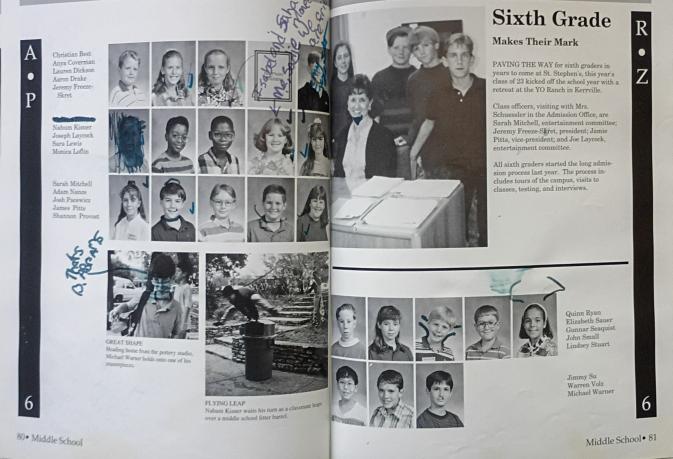
Hill Elementary stopped at grade 5. Liz wanted to continue with her friends in public school, but we wanted her to have a more challenging academic environment. The most prominent local option was St. Stephen's, which was enrolling 6th grade students for the first time. Liz grudgingly accepted our decision, excelled there in middle school.
The (Almost) Definitive 486DX/50 Article is filled with details and likely mostly accurate. It says that Dell and Intel were the only companies shipping 50MHz 486 systems that summer. I thought there were others. In any case, there were thermal problems such that we suspended shipments for at least a few weeks. Pat Gelsinger was the executive responsible for 50MHz 486, so Pat would call me every day with an update of Intel's assessment until we were able to resume shipments.

The flexible design of the 4XXDE and 4XXSE system boards made it possible to try other processor board configurations. Intel asked Dell to work with them to prototype a processor board where the 486DX/50 would have direct access to VRAM (video memory) without impediment of an interspersed (E)ISA bus. The effort/prototype was named JAWS, an acronym for Joint Advanced WorkStation. A favorite sportscaster often says "two different things can be true at once." On the one hand, JAWS had far more significance than any of us imagined when we started the effort. On the other hand, JAWS itself was only temporarily significant, with minimal revenue for Dell.
One of the highlights of my technology career, certainly the most celebrated in the 1990s, was participating in Andy Grove's keynote address at COMDEX, Monday, October 21, 1991, in the Copa Room in the Sands Hotel. Even now, remembering details is surreal. For example, the morning of the event, waiting for my turn, I was in Frank Sinatra's dressing room! I arrived the weekend before, for the rehearsals and for recording of videos to be shown during the address. Andy's staff had prepared a script they wanted me to use for my video recording, but I balked at the script and somehow convinced them that I could do better ad lib. I think I succeeded. I was on stage with Andy Grove using a JAWS system to demonstrate the importance of giving processors direct access to VRAM.
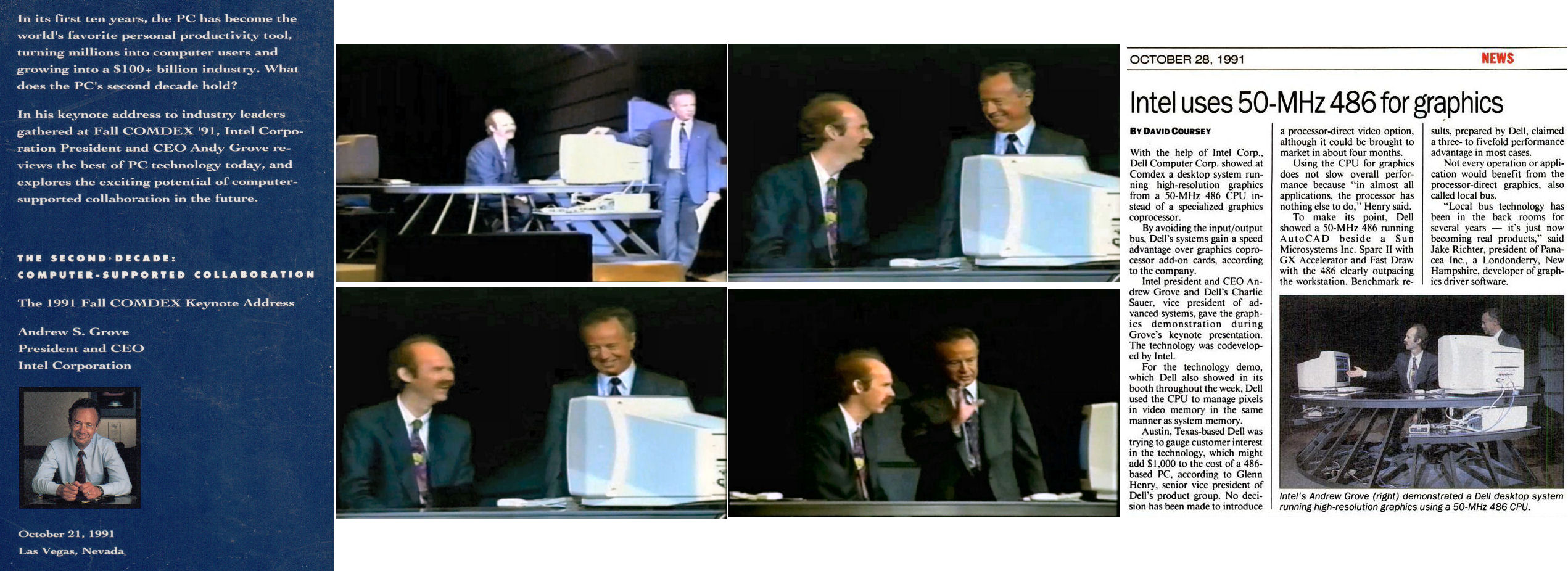
The full VHS version that Intel released is at The Second Decade: Computer-Supported Collaboration. The success of that day, and my part in it, gained me tremendous credibility and influence in Intel. Further, it had much to do with subsequent relationships with Steve Jobs and NeXT, Brad Silverberg and Steve Ballmer at Microsoft, and my effectiveness in the videoconferencing industry and in videoconferencing standards groups. To say that Andy and I became "friends" would be an overstatement, but we were more than acquaintances. We sat together at the celebratory dinner after the COMDEX event. When Andy saw me in the audience at his talks at Intel and at trade shows, he would call out to me. (I did not know whether Steve Ballmer was even aware of me until one morning in 1993 when I was surprised that Steve called out to me across a large trade show exhibit room.) The influence in Intel had longevity — when Paul Otelini (who eventually became Intel CEO) and I encountered each other in a Santa Clara bar some years later, Paul wanted to sit and talk with me.
Construction of our new home seemed to be going well. Every morning I would cycle there to see the progress. Then one terrible morning I discovered charred remains of what I had seen the day before. Investigators determined that arsonists had applied accelerant in at least three places, but no suspects were ever identified. Tommy Jackson got a structural engineer to examine the damage. Fortunately, there had been limited damage to the concrete foundation, so construction eventually resumed.
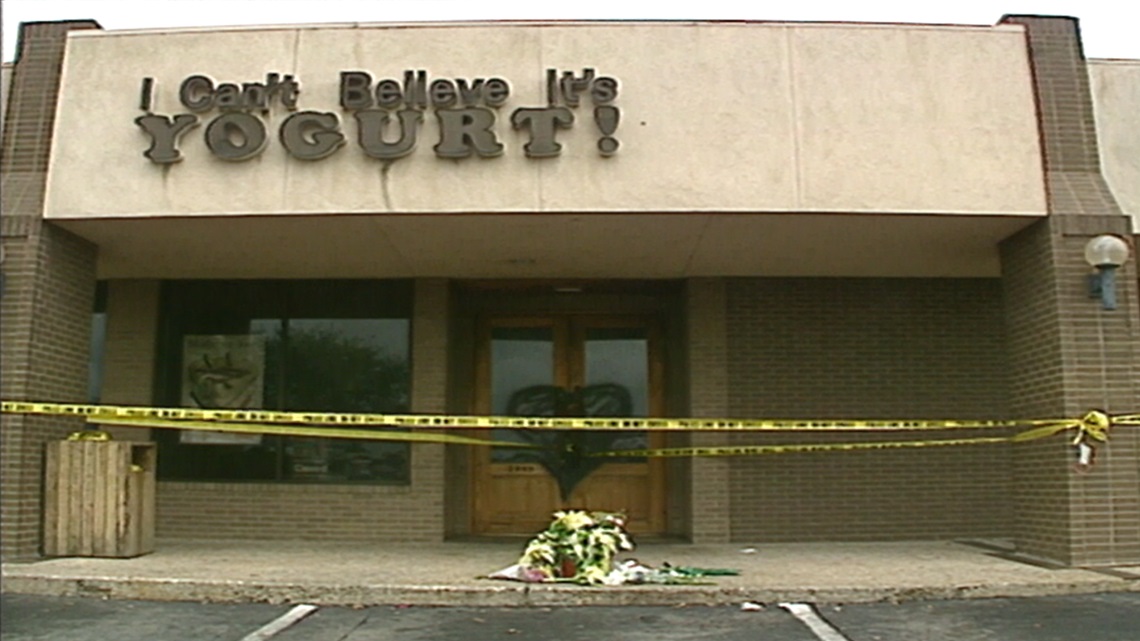
However, local TV reported much worse news December 6. Caroline, Liz and I had been in the habit of getting after supper dessert at the "I Can't Believe It's Yogurt!" shop a couple of miles from us. The murders killed employees we knew. For all we knew, we could have been murdered, as well.
Though our arson paled in importance in comparison to the murders, we were devasasted by both events. We felt the need to get out of town and went to Disney World for Christmas that year.
 |
 |
 |
 |
Not long after our return to Austin, I was summoned to a Sunday morning meeting in Michael's conference room at Arboretum Point. Steve Jobs and Avie Tevanian (leader of NeXTSTEP development) were there to meet with Michael, Glenn, Dennis Jolly and me to show us NeXTSTEP running on a JAWS machine. Andy Grove and Steve had long been friends and had initiated the 486 NeXTSTEP efforts. Dennis had worked for Steve at Apple before joining Dell. Dennis became my cohort in working with NeXT, a 1992-3 multimedia project, and a Web portal product after we had both left Dell.
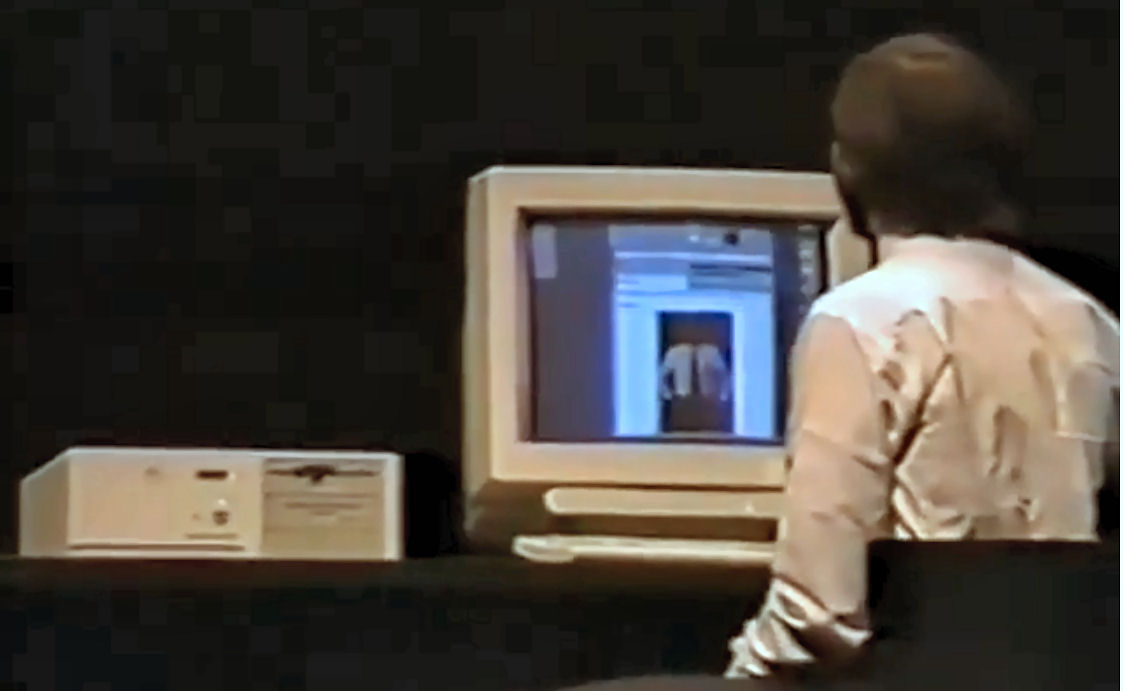
Glenn and I were there to represent Dell. Steve declared that JAWS would become an industry standard. Steve didn't identify the demo machine as Dell 450DGX, but the visible Dell logo and SmartVU character display make the machine identification clear.
Eventually, it would fall on me to try to negotiate agreement between Dell and NeXT. That was an impossible task. I knew the sort of commitment Steve wanted, based on the $10(?) million agreement he had negotiated with Andy Heller at IBM. I knew that Michael would not agree to any volume commitment with any software supplier other than Microsoft. Obviously, I am not a business negotiator at the level of Michael or Steve, but I had to try to work with Steve. While having to tell Steve "no," I ended up making excuses that Steve mocked, but I remained true to what Michael wanted and what I thought best for Dell. In 1993, even though there was no contractual agreement, NeXTSTEP would feature support for Dell JAWS-based and traditional VGA products, quoting me in the press release. I still have Dell 486 machines that can run NeXTSTEP.
Just as Bob Marley likely would have survived melanoma if he had allowed his toe to be amputated, we lost Steve to pancreatic cancer that might have been manageable if his famed "reality distortion field" had not prevailed, Steve had not tried non-traditional treatment, and traditional approaches were effected soon enough.
I had originally hired Joe Maurin to be a graphics architect, even though he was relatively inexperienced. Joe proved to be surprisingly versatile and effective. Joe had done much of the original circuit board design for the JAWS processor card, adding VRAM and other necessary circuitry to the existing 50MHz 486 processor card. He had been a primary interface with Intel in preparing for the Andy Grove event, and was cited in the VHS credits. Joe also arranged for me to appear on a February episode of the prestigious "Computer Chronicles" broadcast with Stewart Cheifet to demonstrate JAWS.
At some level, I (and Andy Grove and Steve Jobs) had been overismplifying in implying, even stating, that the 486 was the best processor to handle the graphics processing. It was true that eliminating the ISA bus bottleneck had trememndous leverage. However, after overcoming the bus bottleneck, providing processor(s) more suited for floating point and typical graphics computations is even better, as evidenced by the graphics workstations of the time and the personal computers developed since then. I seemed to particularly overstate in the Computer Chronicles episode.
Novell Netware was the most important file server software for personal computers in 1992 and before. As a whole, we at Dell thought that our systems should have a larger share of the customers using Netware, but it wasn't easy or obvious how to improve the situation. We were providing server systems, networking interfaces and storage subsystems intended for Netware. Steve Romohr and I continued to try to chip away at other impediments, visiting Drew Major and other technical leaders at Novell, and participating at Networld and other Novell oriented trade shows.
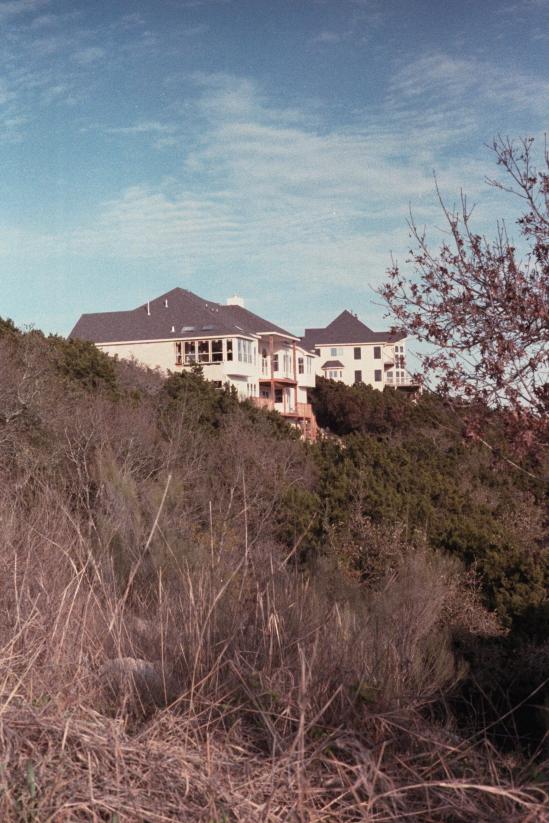
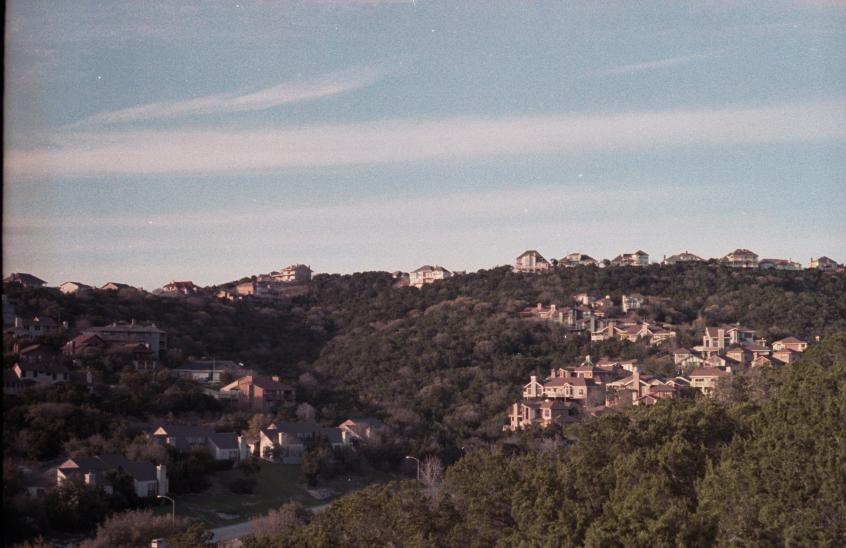
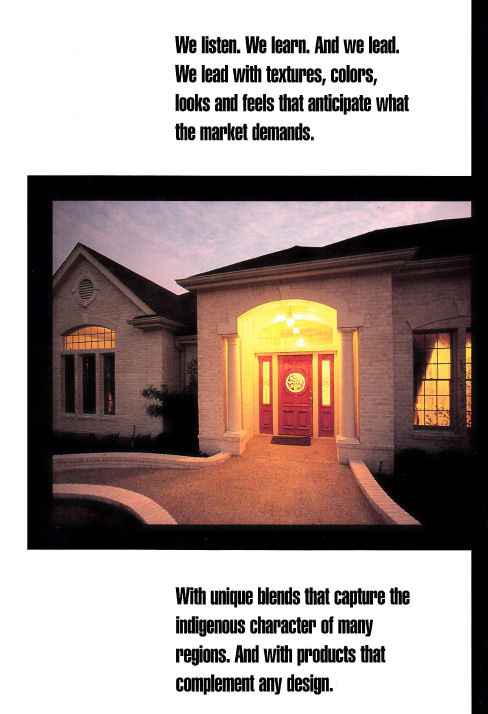
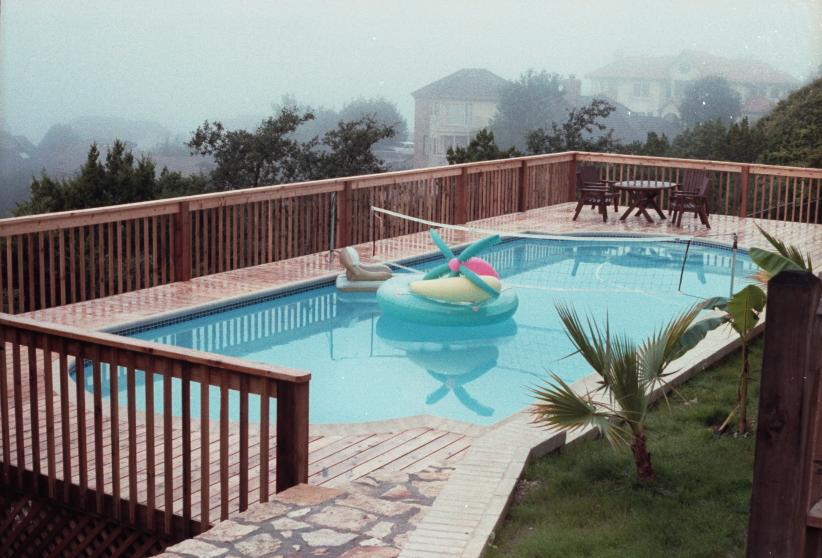
Liz completed her first year at St. Stephen's. Our new home was finally complete. We moved in June 12. We admired how we could see our home prominently from distant vistas. (It is no longer prominent from those vistas because it is now just nestled amongst larger homes.) The brick company featured our home in a brochure with Troy Aikman as the celebrity endorser. We built a pool long enough for lap swimming — one of the reasons we decided to leave Crowncrest was Caroline's desire to have a large pool.
 |
 |
 |
 |
June 15 would bring a long anticipated inflection in the computer industry and dramatic changes at Dell. Compaq had long been the primary manufacturer of "IBM compatible" personal computers. With IBM's PS/2 mis-steps and Compaq's premium pricing, it was our ambition to overtake both IBM and Compaq. Dell pursued product excellence, lower prices, and agressive advertising. Compaq was clearly impacted, pursuing legal attacks in April 1991. From Compaq Trims Prices And Sues Dell on Ads: ''A typical Dell ad shows one of the company's most powerful models, the 433TE, under the heading "Turbocharged," and with a price of $15,099. Next to it is the Compaq Systempro 486/33 under the heading "Overcharged," with a price of $27,698.'' Later in 1991, Compaq would experience its first quarterly loss and fire co-founder and CEO Rod Canion.
It seemed inevitable that Compaq would respond with much lower priced products, which they announced June 15, 1992. See Compaq to Introduce Low-Cost Machines and Compaq unveils now lines of low-cost notebook, desktops. Dell Product Group reorganized dramatically to focus on essential development projects and de-emphasize projects less justified financially. Most obviously, Kendall Witte and other key members of the Dell Unix team were reassigned to other products. See A Brief History of Dell Unix. Dell Unix efforts had to continue because of existing customer commitments. (Jeremy persevered to complete the contracts and definition for the 1993 Dell Unix 2.2.1 release in 1993, then left for a new opportunity in Denver.) Jay turned his focus to new portable computers. Terry turned his focus to assisting with various patent litigation, eventually pursuing enough self-study to pass the patent bar without ever attending law school. My team also established new development projects targeted at specific customer opportunities, most notably the "Oasis" audio/video/networking card.
Joe Duran and I had lost contact for many years after graduate school. One day, Caroline and I were having lunch at the Simon David cafeteria at the Arboretum. I looked across the room and exclaimed to her "isn't that Joe?" Joe and I quickly re-established our friendship. He came and admired our new home. Joe had co-founded VideoTelecom, building videoconferencing systems when such systems were just beginning to be developed. Their company was then officing in a building almost next door to the Dell development building on Braker. Joe demonstrated their products for me.

Even for those of us who have worked with digital audio and video for decades, it is hard to grasp how different things are today vs. 1992. Today, high resolution real time video is taken as given on phones, computers, and even gasoline pumps. In 1992, digital video was extraordinarily challenging for standard computers and only practical with custom processors. Even then resolution was limited. Receiving video was relatively easy, but sending video extremely difficult, so real time intereactive video was correspondingly difficult. Long distance networks were typically at least a thousand if not 10,000 times slower than today's wireless and wired networks. Even local networks were typically a hundred times slower. Technology Bottlenecks & Bumps in the Road describes the basic problems — subsequent discussion in our book details the problems and ways they could be addressed in 1997. Distance Multimedia: 5 score & more provides a chronology dating back to the 1880's.

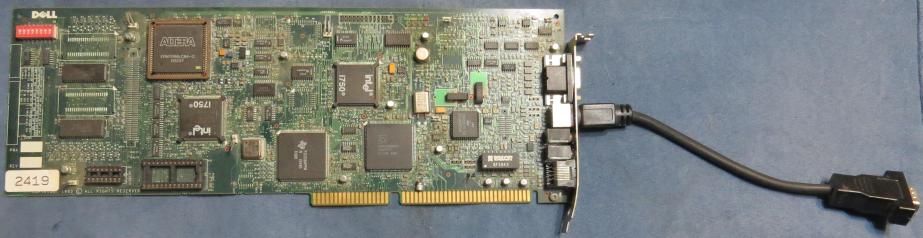
Digital Video Interactive (DVI) is a PC-oriented motion video approach developed in the mid-1980s at The David Sarnoff Research Center and purchased by Intel in 1988. Andy Grove was a strong proponent of DVI. Eventually the brand "indeo" - Intel Video Technology was adopted. Intel developed a succession of i750 pairs of chips to support DVI. One of the pair was a pixel processor for encoding and decoding video and the other a display processor for interface to display devices. Jostens Learning Corporation planned to provide DVI-based instructional materials based on Dell machines equipped with the Oasis card. Prior DVI implementaions used separate video, audio, and network cards. (This was long before audio and networking were integrated in standard PC designs.) Oasis provided motion video (using the second genaration i750 PB and DB chips), audio, and Ethernet all on one card. Tom Dye and Joe Maurin were primary hardware designers. Donn Baumgartner and Randy Howard, formerly of the Dell Unix team, provided the needed software. Dennis Jolly was the sales vice-president responsible for the Jostens account. Dennis and I would make periodic trips to San Diego to work with Jostens and then also visit with Steve Jobs at NeXT to discuss NeXTSTEP plans.
 |
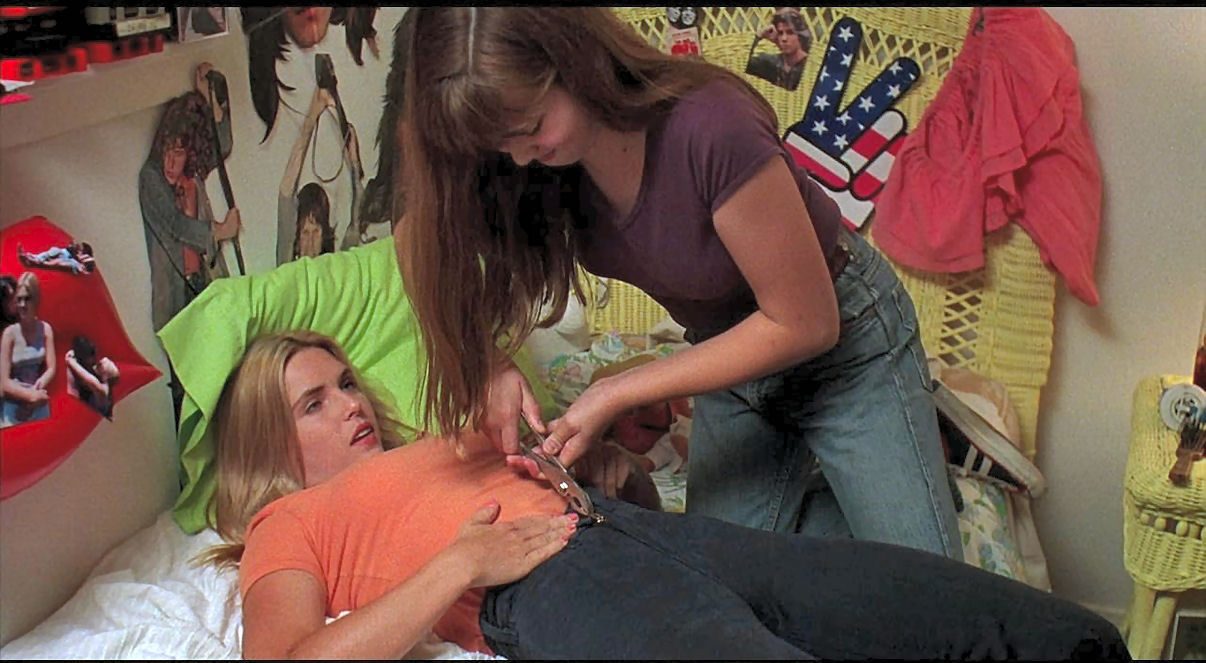 |
A former neighbor from Crowncrest told us that Richard Linklater was looking for extras for his new film. We were vaguely aware of his prior film Slacker but could not have imagined the eventual import of the new film, Dazed and Confused. Of the credited cast, I think the only ones we knew of were Milla Jovovich and a local actress, Mona Lee Fultz. (Liz later told us that Milla taught her to smoke cigarettes.) We had no idea that Liz would be working with future stars such as Matthew McConaughey, Ben Affleck, Cole Hauser and Parker Posey. Liz even appeared in the trailer, using pliers to zip up pants.
It wasn't at all clear whether there would contine to be a meaningful role for me at Dell. I knew two of the founders, Bob Fabbio and Todd Smith, of the Tivoli startup. I was approached about leading development at Tivoli and met with Bob, Todd and a couple of other principals. I probably could have taken that position, but I was ambivalent and ultimately did not pursue after the initial meeting.
Intel was beginning to work on what would become the ProShare videoconferencing products, led by Pat Gelsinger in Hillsboro, Oregon. I don't remember how the discussions started, but Pat wanted me to work for him as a lead architect for ProShare. That was tremendously exciting, but also daunting. Glenn and I made a west coast trip to silicon valley to meet with processor people there, John Crawford at Intel, John Hennessy at Stanford, and John Mashey at MIPS, and then to Hillsboro to meet with Intel processor people. I met with Pat to talk about the ProShare possibilities. When I got home, Pat called to make a formal offer. I really wanted to accept, but didn't want to move to Hillsboro. It seemed logical that I could live in Austin, engage with the ProShare team by video, with frequent travel to Hillsboro. However, ProShare wasn't far enough along and other videoconferencing options were likely infeasible. Pat and I spent a long time on the phone, me trying to persuade Pat that I could work from Austin, while Pat tried to persuade me to move to Hillsboro. (Years later, an Intel friend would relate astonishment and disappointment that I declined Pat's offer.)
Glenn was aware of my discussion with Pat, and probably aware of the Tivoli discussions, so Michael was also aware I was considering leaving Dell. Michael came to talk to me and said something to the effect of "I think you should stay." That was enough to overcome my ambivalence.
Joe had asked me to join the VTEL technical advisory board. Glenn had been reluctant to allow me to do so, but ultimately acquiesed. Besides Joe, I mainly remember meeting Andy Lippman, of the famous MIT Media Lab, and getting reacquainted with Don Fussell. It seemed that every board meeting, Don would want to talk to me about this new "Linux" system and how I should be paying attention. At the time I was still biased toward Dell Unix and thought Linux was not likely to be important. A few years later I would be asking Don's advice about getting started with Linux.
Herb Schwetman had been teaching the CS352 computer architecture course at UT as an adjunct professor and encouraged me to do so as well. I taught that course in fall of 1992 and spring of 1993. I got Glenn to come give guest lectures on x86 architecture to combined sessions of Herb's and my classes.
There were two meetings at Dell that Spring that seemed especially important, one in a negative way, and one in a positive way. There was a product planning meeting that Michael participated in very actively, more so than usual. As I presented plans for upcoming server development, Michael asserted that he could not believe there were no plans for servers with Rambus memory. I knew that Intel was probably telling Michael that Rambus would be critically important. Rambus had the potential benefit of higher bandwidths, but at a cost of increased latency. I believed the latency problem would not be overcome, that Rambus memory would never be important, and that it would take unreasonable development effort to try to support Rambus. Michael was obviously displeased with that perspective. That was one of the few times where Michael and I disagreed about technology where I turned out to be right — Rambus did not appear in PC's until 1999 and was never successful. That meeting was the last significant discussion I had with Michael at Dell — it was clear to me that Michael no longer trusted my judgement.
The other memorable meeting was senior Microsoft executives visiting Glenn. It was there that I first met Paul Maritz, Rob Glaser, and Brad Silverberg. Brad told us in persuasive detail of plans for "Chicago." Chicago would become Windows 95, the first version of Windows that I really liked. Brad and I began to develop a relationship that would last past my time at Dell.
 |
 |
 |
|
 |
 |
 |
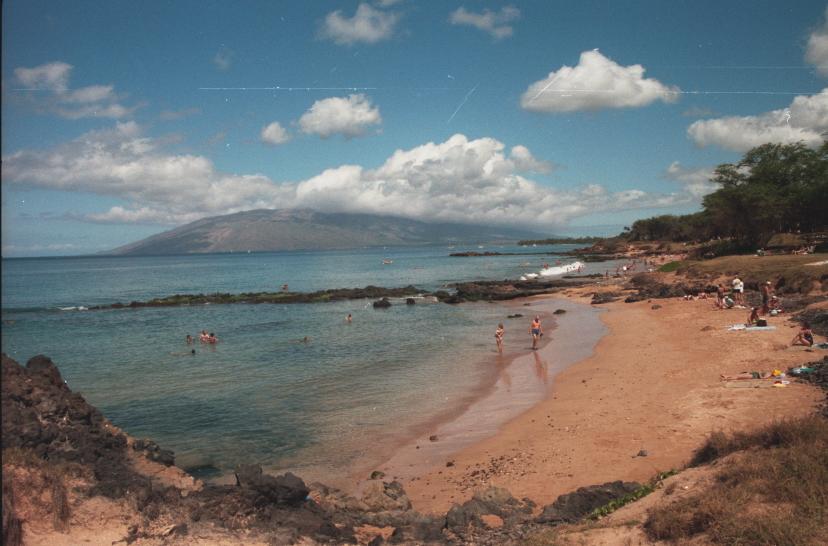 |
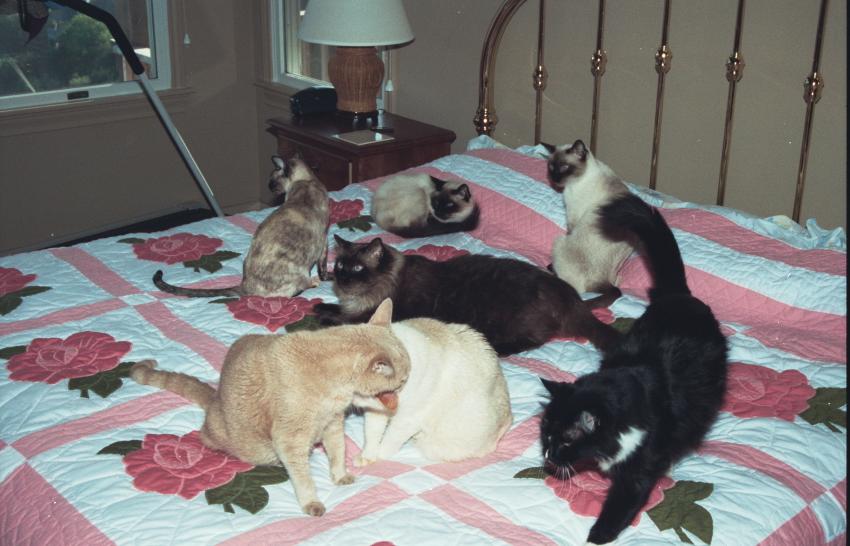
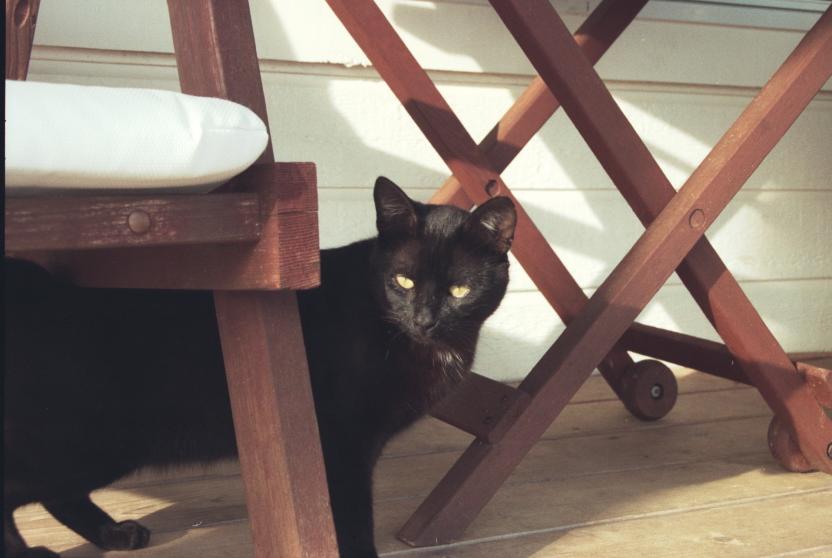
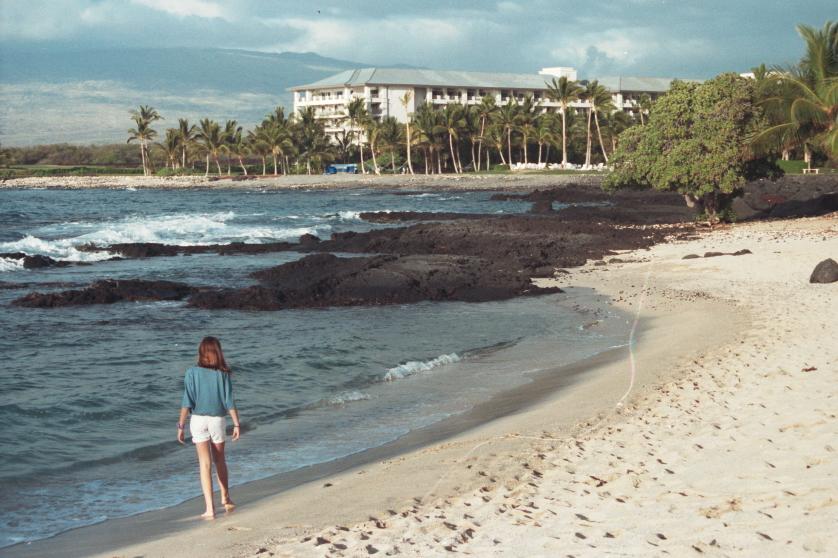
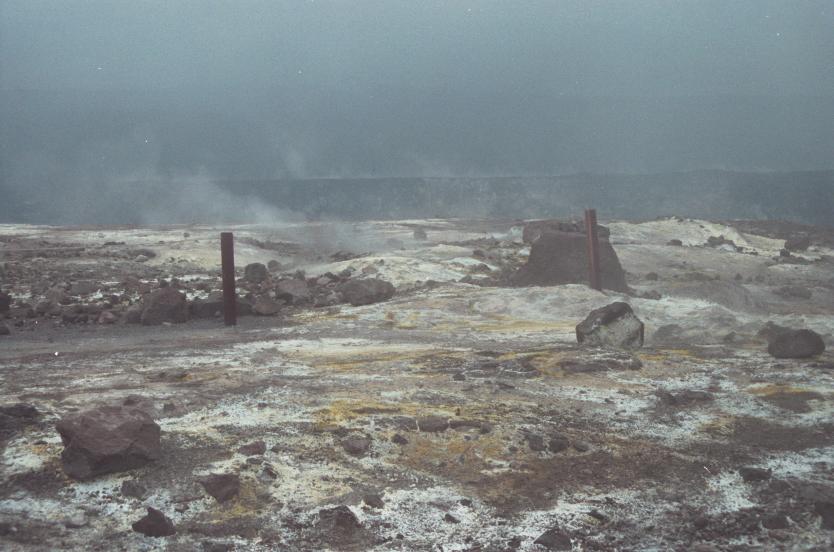
Liz seemed to be fitting in well at St. Stephen's, with lots of friends, especially Monica. We had seven cats still with us from prior homes: Nini from Norris was still strong. I was walking down Hawkes Avenue one Sunday and happened upon a litter of kittens up adoption. Omelet struck my fancy and Caroline agreed. Maah we got at a cat show while living on Crowncrest. Cotton came from a neighbor's litter on Crowncrest. BMW and Puffy adopted us on Crowncrest. BeauBeau came to us on Crowncrest from one of the many ferals that Big Mom nurtured in Salado. We also attracted and nurtured ferals on Valburn, most notably Balthy, as chronicled by Caroline. We took advantage of a deep discount to stay at the Fairmont Orchid on the leeward side of the Big Island, drove all around the upper parts of the Big Island, visited Kilauea again, and capped off our vacation at Kamaole Sands.
There was a sequence of abrupt changes in Dell Product Group. Michael brought in Eric Harslem and John Medica from Apple to lead Product Group and portables development, respectively. Glenn retained his senior vice-president status but was effectively a Dell Fellow, with a small group of strong technologists trying to define what to do next. With John assuming responsibilty for portables, Mike O'Dell became responsible for most of the other products, with me reporting to Mike. In August, Intel entered into a development and license agreement with VTEL, and Mike left to run development at VTEL. Yet another new hire took my responsibilities and I joined Glenn's group. It seemed clear that Glenn would leave Dell to start something new. He wanted me to wait while he sorted that out, but I was impatient to leave. Glenn and several others would eventually leave to form Centaur.
I considered trying to join Tivoli which was now highly successful. Frank Moss, whom I knew from IBM Yorktown, was now Tivoli CEO. I met with Frank and Todd Smith, but there didn't seem to be a good role for me at Tivoli. On the other hand, VTEL seemed especially attractive after the Intel investment, the planned integration of ProShare into VTEL "room systems," and my history with Joe. I asked Mike to hire me and intially became VP of system architecture.
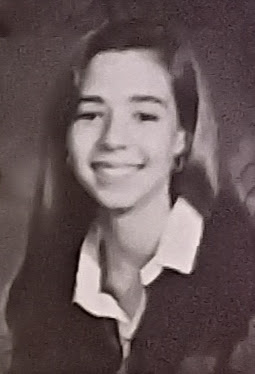
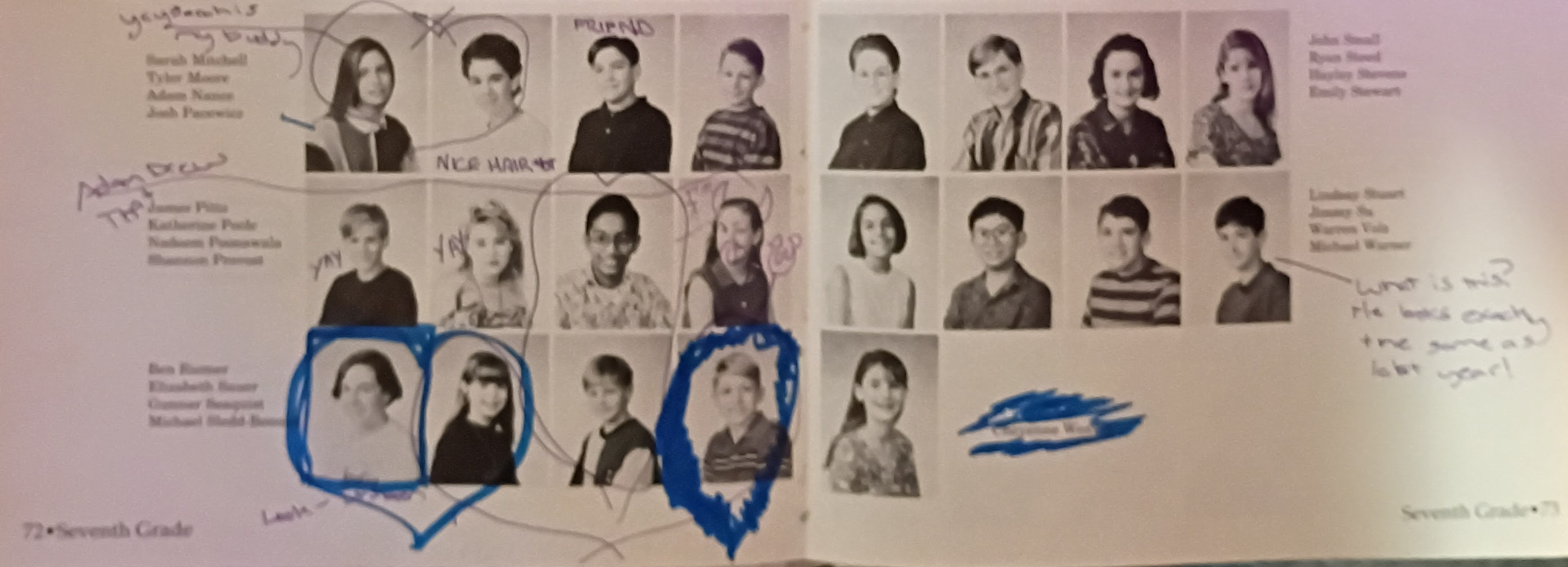
Liz started 8th grade at St. Stephen's, the last year of middle school. She met (Ni)Cole Dubois in Latin class. They became inseparable friends and the star students in that class. My new office might not have been as elegant as at Arboretum Point, but it was quite nice with a view of Wild Basin Wilderness Preserve. The commute down 360 made it easy to stop at St. Stephen's.
My experience in starting new jobs suggests that they are nver the job I thought I was taking when I interviewed. At IBM Yorktown, I thought I would be working on developing approximate and numerical solution methods, which I considered the most promising parts of my dissertation. But my management thought that the simulation work was the most important and that I should emphasize that. When I started working for Fred and Glenn on AFWS, I had no idea I would be leading the definition of a new virtual machine environment. When I started at Dell to lead "product planning," that hardly included managing a VLSI team. Likewise, interviewing with Dick Moeller, VTEL CEO, and Mike, I expected I would focus on working with Intel to fulfill the expectations set as part of the Intel investment, and defining future products. I had no reason I to expect I would be rescuing a flailing product development team.
VTEL systems prior to 1993 were nominally PCs in large chassis dominated by boards for audio/video/circuit switched networking. VTEL systems supported conferences with presentation materials, shared computer applications and integration of peripherals, extending the capabilities beyond audio and video. The PenPal graphics tablet-based conference control and DESQview task-switching with DOS enabled users to share PC facilities during video conferences. VTEL had announced a Windows 3-based system ("SMAX") that had much smaller audio/video/network boards to go in standard ISA slots in a PC. SMAX was supposed to have shipped about the time I arrived. I was immediately tasked with "herding cats" to get it to ship 9 months later.
The December 1993 Anaheim PDC was effectively the party welcoming people outside of Microsoft to start using and developing for "Chicago" (Windows 95). I was captivated by Win95 and how it could transform VTEL. [Rick Rashid left CMU in 1991 to lead Microsoft Research. Rick and I bumped into each other at the gift shop at Cinderella's castle and chatted about how dramatically our professional lives had changed.]
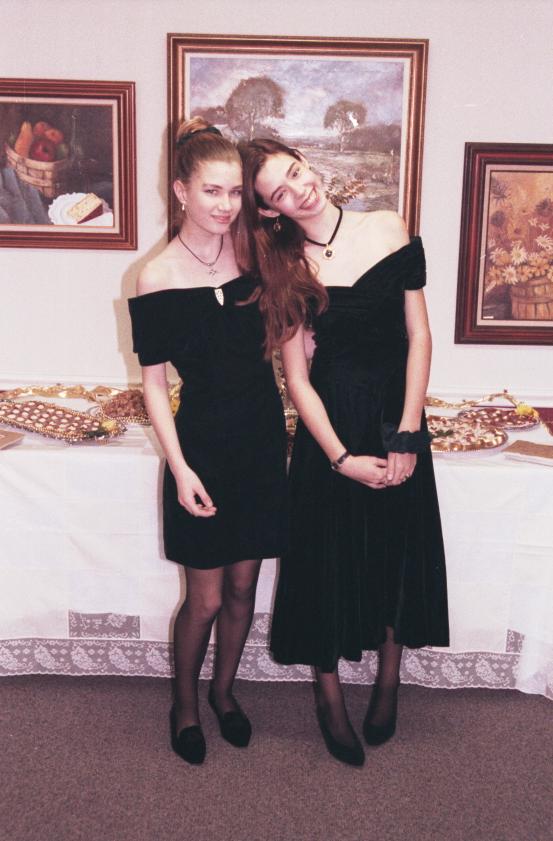
December 26 we helped Big Mom and Big Dad celebrate their 50th wedding anniversary at Mill Creek Country Club in Salado.
 |
 |
 |
It would be overstating to allude to Dickens to characterize the next few years For VTEL, and the people that worked there, as best/worst of times, but there were elements both ways. Perhaps citing Jagger/Richards' Good Time/Bad Times would be apropos. It is astonishing that while none of the larger competitor companies survived the decade, at this writing there is still exists a (much smaller) VTEL company providing videoconferencing products.
Mike's predecessor as head of development abruptly left to take the same position at a larger competitor. That puzzled in various regards. I had known him as a graphics architect when he reported to me at IBM. He had no prior management experience when he was hired to manage development at VTEL. At VTEL, he championed the ill-fated OS/2 evironment over Windows and dramatically overcommitted the development team to
On top of those committments, there were the August expectations set with Intel. "VTEL will bring Intel's desktop personal computer video technology, Indeo video, into its videoconferencing product line, which includes MediaMax, DeskMax and MultiMax [MCU-II] systems."
As hard as it is to imagine/remember people booing Dylan when he picked up his Stratocaster in 1965, or the Stones playing to half-full auditoriums in 1966, it may be harder to think about how limited cell phones, personal computers, televisions, and Internet connections were in 1994:
Intel announced ProShare January 26th: “We are entering an era when people will use their PCs to make and receive calls and to solve business problems together,” said Andrew S. Grove, president and chief executive of Intel, a computer chip maker based in Santa Clara, Calif.
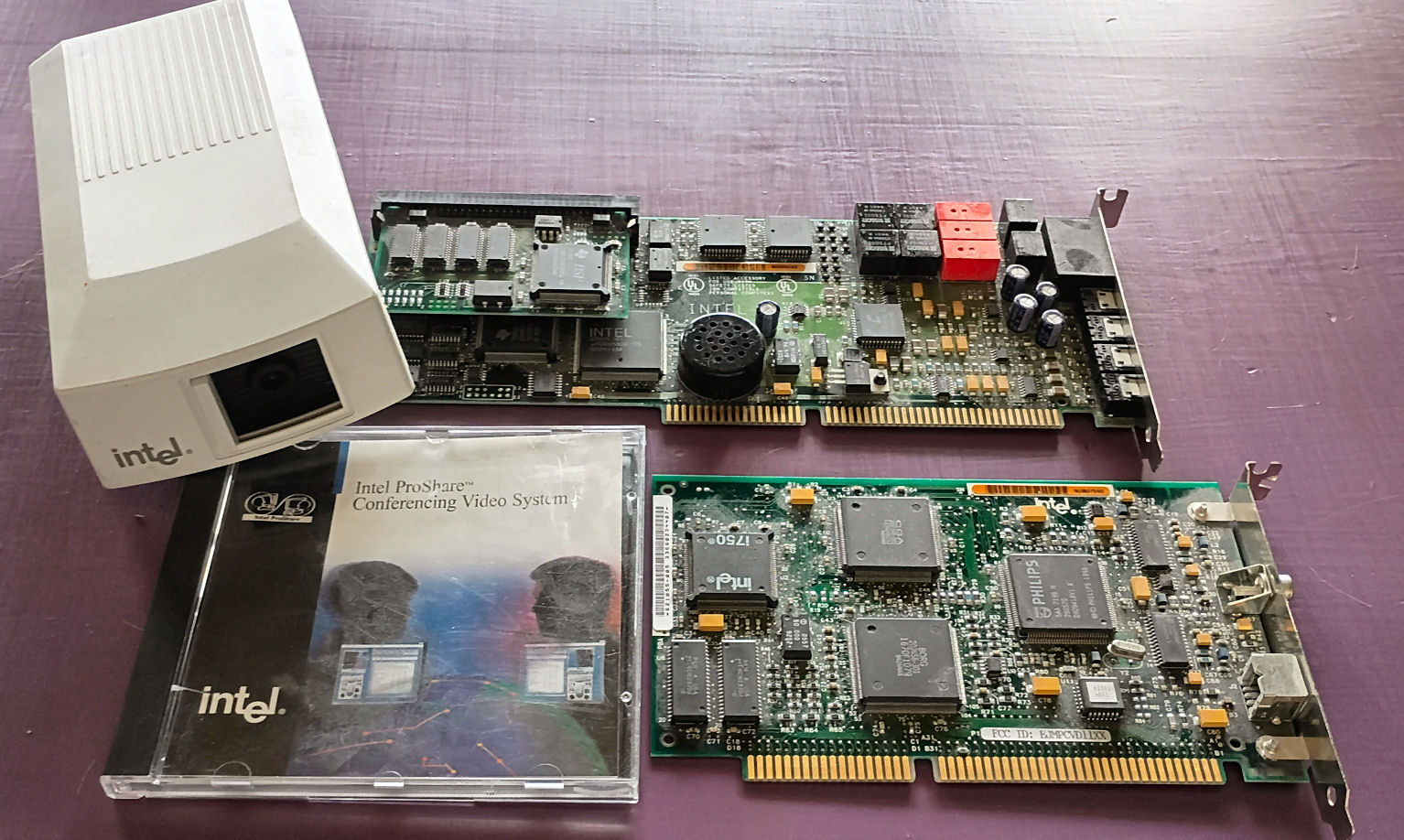
ProShare was intended to be the product realization of the collaboration Andy had demonstrated in his 1991 COMDEX keynote address. Though there was a $99 software-only dataconferencing offering, the full $2,499 product included a video camera, earphones/microphone, and a two-board set for videoconferencing using Basic Rate (128,000 bits/second) ISDN connections. With such limited connections, even with extreme frugality, audio was limited to 3.1KHz and video was limited to 176x144 pixels (QCIF) at less than full motion frame rates.
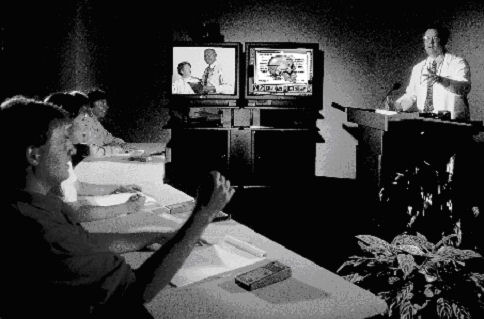
It would seem that Intel and VTEL had compatible product objectives, but that was just superficially true. The differences weren't as obvious as between apples and oranges, more like comparing tangerines and oranges. The differences were in price points, customer environments, and usage scenarios:
VTEL group conferencing systems (and those from competing copanies) were targeted at 384,000 bits/second (or faster) connections, with echo-cancelling speakerphones, sophisticated cameras, and full motion video at 352x288 pixel resolution.
VTEL and competing companies had recognized in the 1980s that the success of their industry depended upon competing systems being able to establish conferences with each other. Through what is now known as the International Telecommunications Union Telecommunication Standardization Sector (ITU-T), under the auspices of the United Nations, standards (nominally, "recommendations") were developed. Perhaps the most important in 1994 were H.221 "Frame structure for a 64 to 1920 kbit/s channel in audiovisual teleservices," defining how to use communiation circuits, H.261 "Video codec for audiovisual services at p x 64 kbit/s," G.7xx recommendations for audio coding, and H.320, "Narrow-band visual telephone systems and terminal equipment," which described the overall framework. Joe and people on his staff actively participated in ITU-T meetings and had helped create these recommendations. People from competing companies that had also helped create these recommendations would visit Joe and I started getting to know them.
The initial ProShare products adopted alternate approaches that were incompatible with these recommendations, to be frugal with the 128,000 bits/second channel (and ambition for 56,000 bit modem options), to use the most cost effective processors, and, presumably, because of "Not Invened Here" (NIH) tendencies that are pervasive in the technology industry. H.221 parsed channels in to 8,000 bit portions, but ProShare used cell-phone industry GSM audio channels of roughly 6,000 bits/second. H.261 assumed at least 64,000 bits for video, but Indeo could make do with less. Though ITU-T meetings had begun defining what would become T.120, "Data protocols for multimedia conferencing," ProShare developers had begun defining data collaboration protocols years earlier. That ProShare had eschewed ITU-T recommendations was controversial within VTEL, with competitors aligned with Intel, with competitors not aligned with Intel, and even amongst Intel developers.
The ITU-T deliberations and process for finalizing recommendations would take years, at least four years, occasionally fifteen. For example, the G.723.1 and G.729 recommendations for audio in 6 to 8 kilobits/second channels were well understood in 1994, but would not be approved until 1996. Videoconferencing companies were trying to establish auxiliary organizations to expedite deliberations and approval, ultimately leading to the formation of International Multimedia Teleconferencing Consortium (IMTC) in 1994. The Internet Engineering Task Force (IETF) seemed to progress faster, but not at the speed of PC hardware and software vendors as influenced by Intel and Microsoft.
Along with ProShare, Intel was forming the Personal Conferncing Work Group (PCWG), a de facto competitor to those forming IMTC. PCWG would attempt to accelerate conferencing technology in personal computers and promote statnds adopting the ProShare approaches. Some companies, including VTEL, naturally affiliated with both. Danny Diaz, a former Dell colleague who had also joined VTEL, and I were primary participants in the initial PCWG meeting at Intel headquarters in April. There was a welcoming dinner hosted by Pat Gelsinger and a working lunch hosted by Andy Grove. Renée James (who would eventually become Intel president) led the marketing discussions.
The competing priorities in over-committed VTEL development included making existing VTEL products support ProShare protocols and characteristics, including adding Windows support to the legacy MediaMax systems, completing the committed SMAX low-cost product, and designing/developing/delivering the next generation higher end DeskMax system. DeskMax had already been publicized in the original Intel announcements. Some of the most influential DeskMax development people lobbied that Intel and SMAX commitments be ignored so that DeskMax could become a leadership product in a competitive time frame. Looking back, perhaps some of those people also wanted to abandon PC compatibility to focus on an appliance that would be superior in audio/video and support of business presentations. VTEL largely failed to deliver the committed ProShare support — in 1997, VTEL would refund much of the original Intel investment.
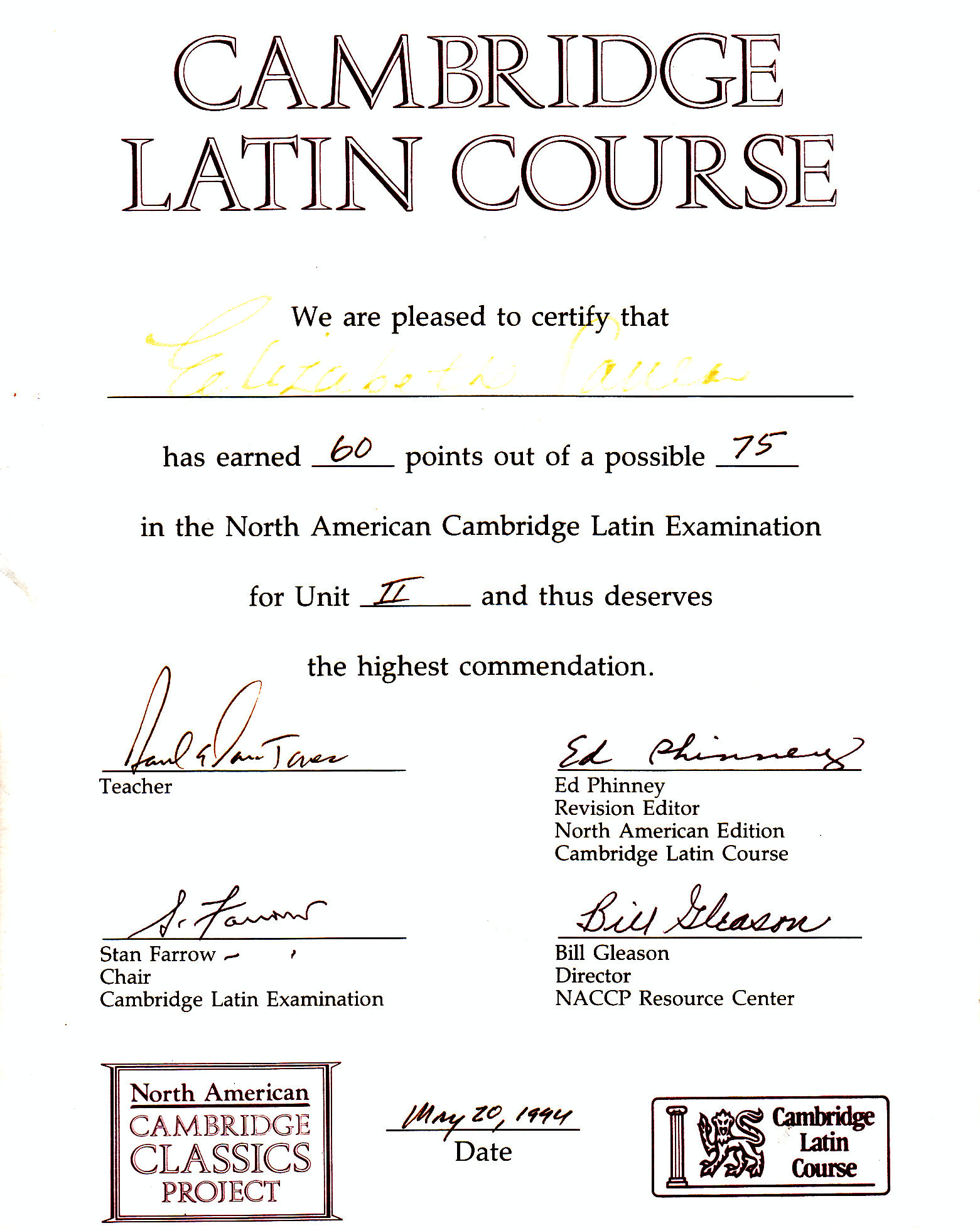
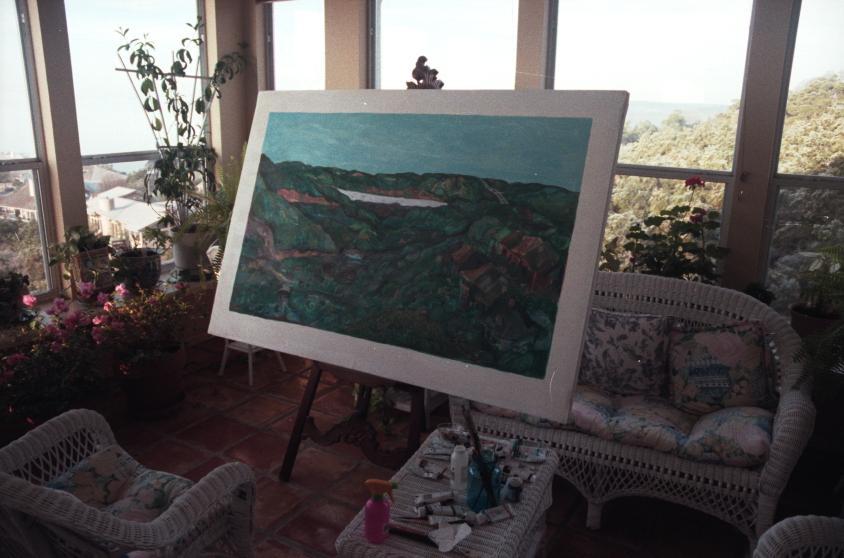
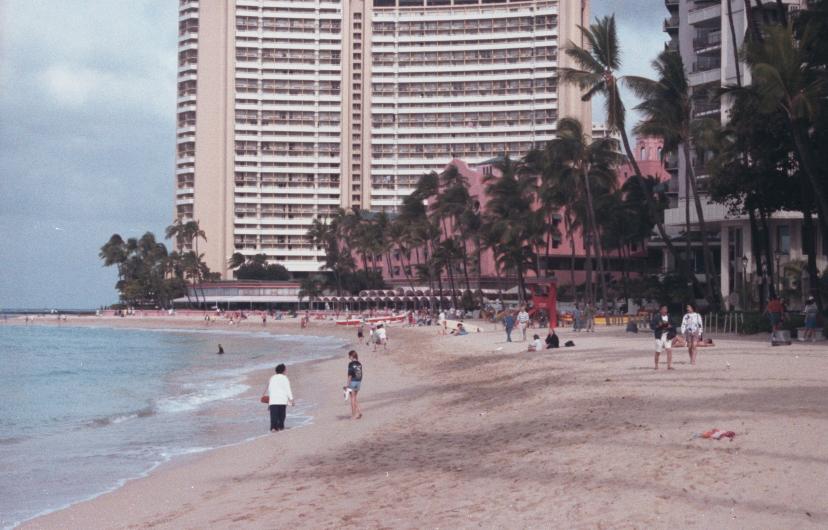
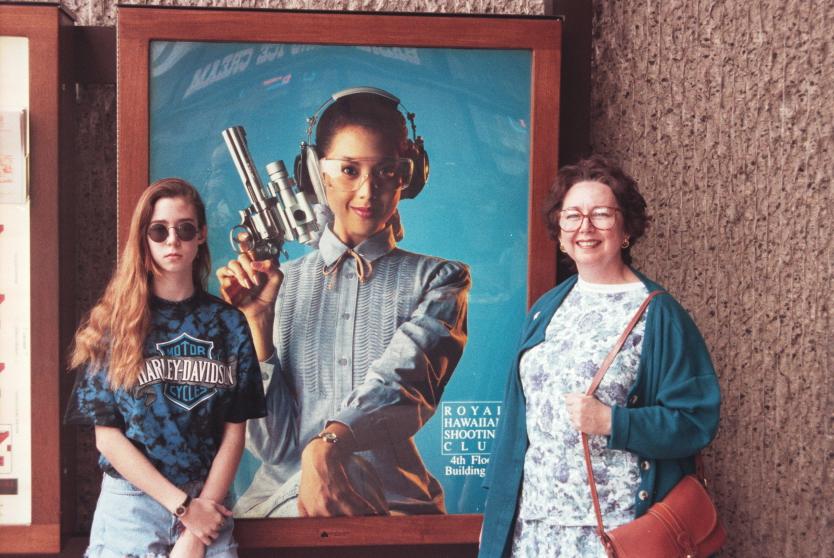
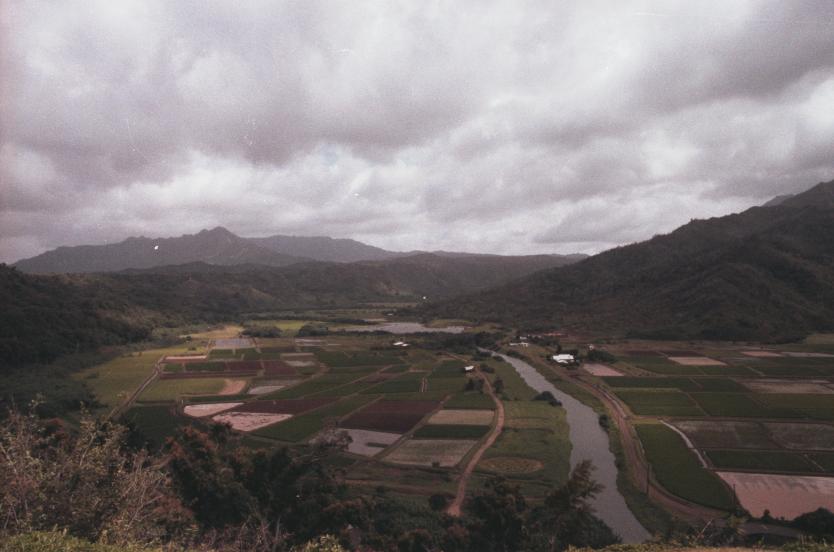
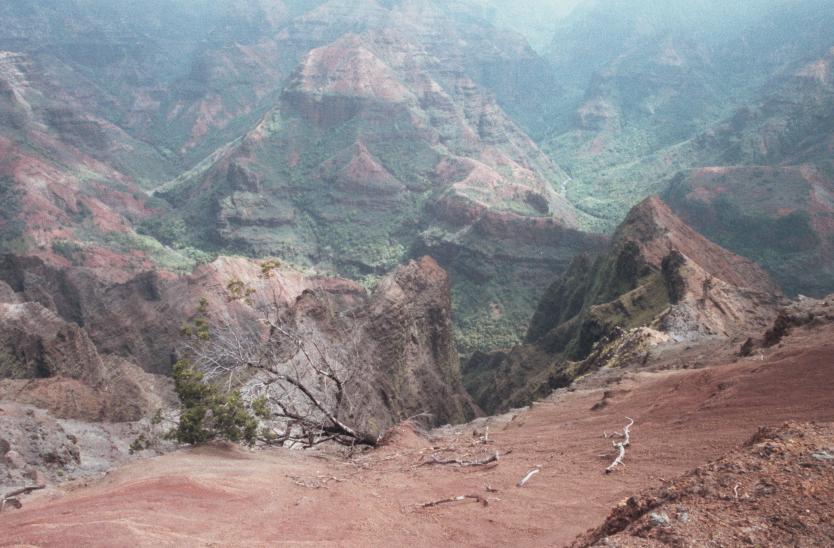
Liz completed middle school (8th grader) at St. Stephen's. Liz and Cole continued to excel in Latin, with Liz receiving a special commendation. Caroline began painting large landscapes of the view from our house. Those paintings depict the view before a multitude of houses and other buildings appeared. We vacationed at the Pink Hotel, and went to Kauai to get a sense of where Jurassic Park was filmed. We didn't find filming sites, and were disappointed with our beach/condo vs. Kamaole, but we did find Hanalei and Waimea Canyon exotic.
 |
 |
 |
 |
I have oft quipped that in those years "my job was going to meetings." There were meetings with Intel about ProShare. There were PCWG meetings. There were IMTC meetings. And there were Microsoft meetings about Chicago. Most of those meetings were in California, Oregon, and Washington, so it seemed I was always traveling. I was particularly engaged in the "Windows Insider Program" that enabled special access to Chicago development. When I was in Redmond, Brad Silverberg personally installed the latest Chicago build on my laptop.
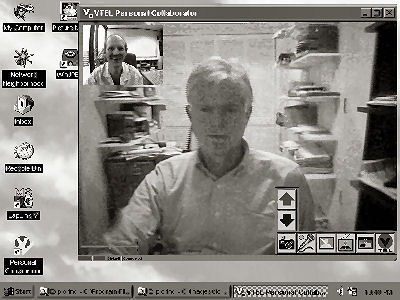
SMax (VTEL "Personal Collaborator") was finally finished and available to customers, but almost an afterthought, since it was effectively a year late, not as capable in regard to audio/video/connectivity as MediaMax, and based on obsolescent Windows 3.1 user interfaces. Much more significant was developing a new user inteface, AppsView, that seemed to adopt the best aspects of the prior VTEL "PenPal" tablet and fit with the preliminary developer releases of Windows 95. Section 4.1.5 of Mainstream Videoconferencing elaborates in detail.
Over the years, I had become the de facto chaperone when Liz and her friends wanted to go to large concerts that Caroline and other parents eschewed. For example, I had taken Liz and friends to see New Kids on the Block at the Erwin Center in 1990, in spite of my disinterest. Some were more interesting, such as Aerosmith at South Park Meadows in 1994. (In February 1995, the roles sort of reversed — Liz accompanied me to see Buddy Guy at Liberty Lunch so that I would not have to go alone.)
Joe left VTEL and joined former VTEL co-founder/CEO Larry Seligman in a multimedia group at Motorola in Austin. Joe received an SMax system as a parting gift. I took responsibility for Joe's former staff and for the technical advisory board. If I recall correctly, the board incdluded Bill Curtis, Don Fussell, Al Korenjak, Andy Lippman, and Carl Stork. Joe and I started planning to write a book on video conferencing. Peter Salus helped us engage Addison-Wesley to publish the book.
Though we (in the large sense) did not realize, 1995 would characterize the best year for VTEL, and the "group conferencing" industry as a whole. Subsequent years would be defined by stagnant or declining revenues, dramatic changes in the product possibilities, and major restructuring of companies through acquistions, startups, and divestitures.
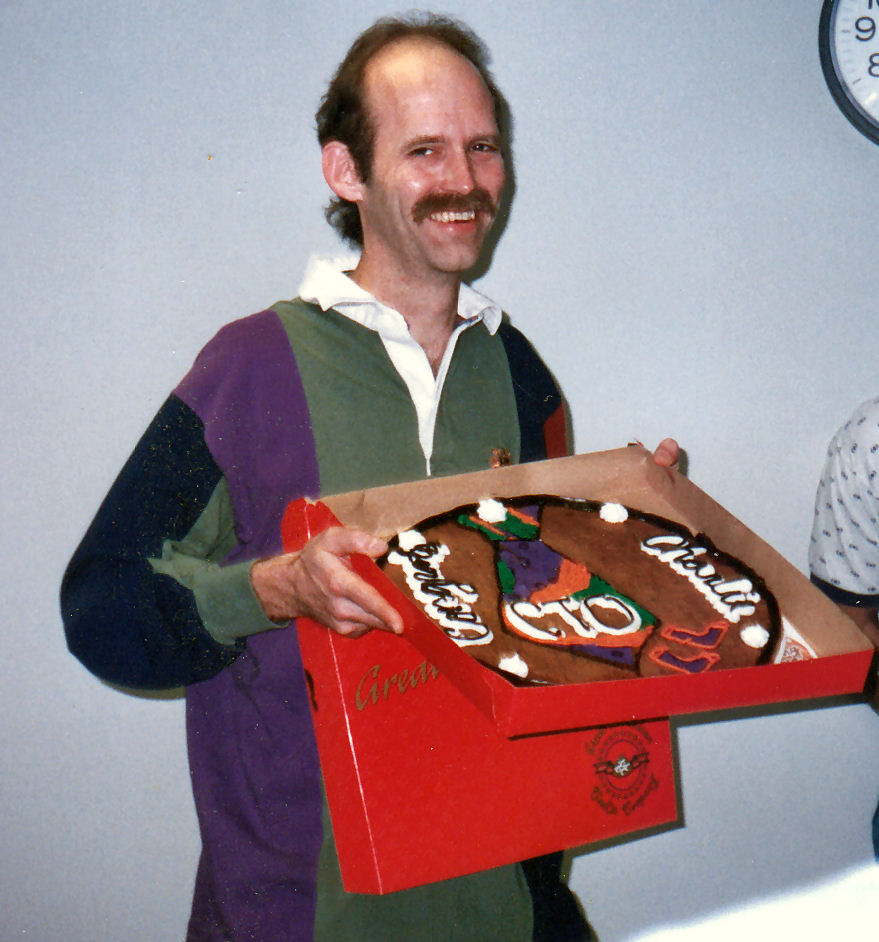
January 17, version 1.0 of the Personal Conferencing Specifation was announced.
January 20 I was named Chief Technical Officer. In principle, I was supposed to be surprised, but I had been asked to review a presentation that inadvertently included the announcement. It was also awkward because Joe had been CTO prior to his departure.
In February WinMax — Windows plus AppsView for MediaMax — was announced.
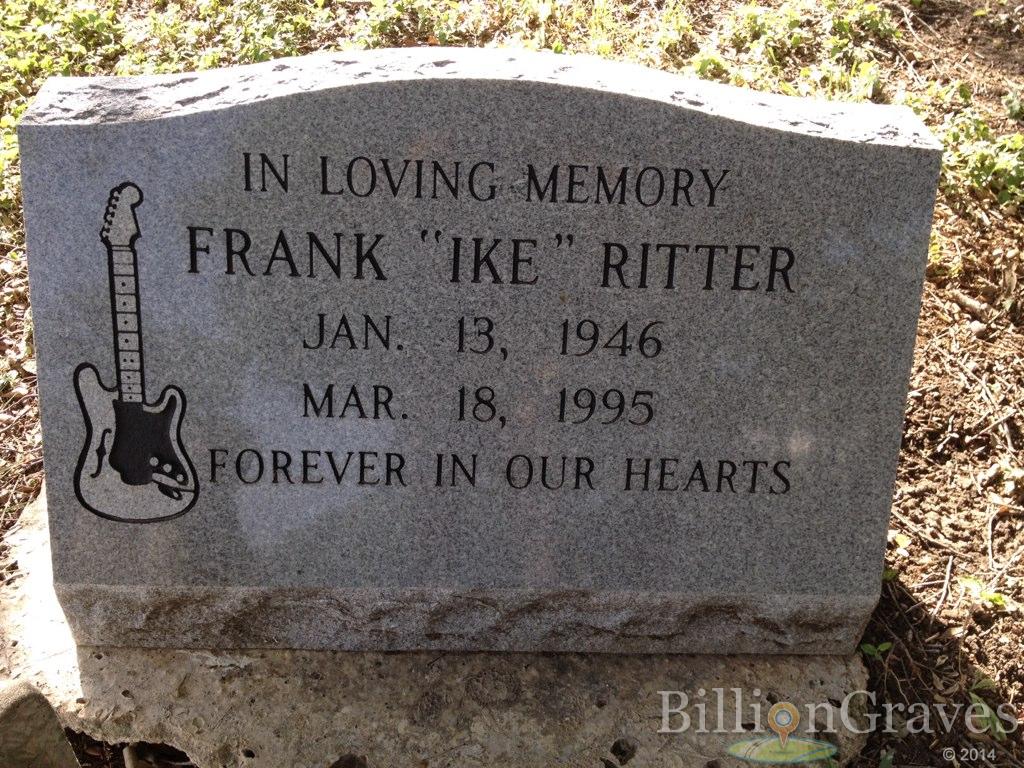
Ike Ritter died in March. I regret not going to his funeral service. Though there have been several gatherings of the remaining members of the Hub City Movers, a reunion performance without Ike is not plausible.
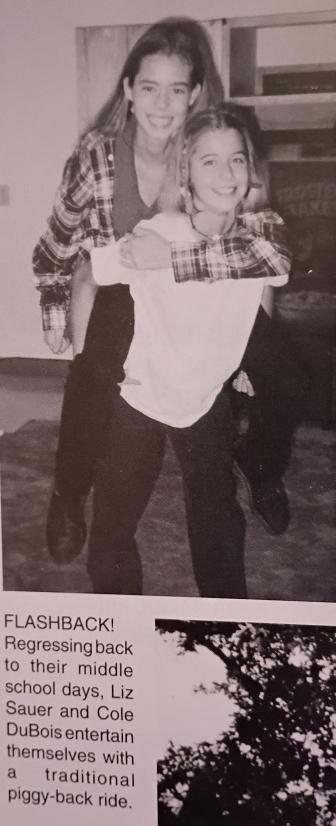
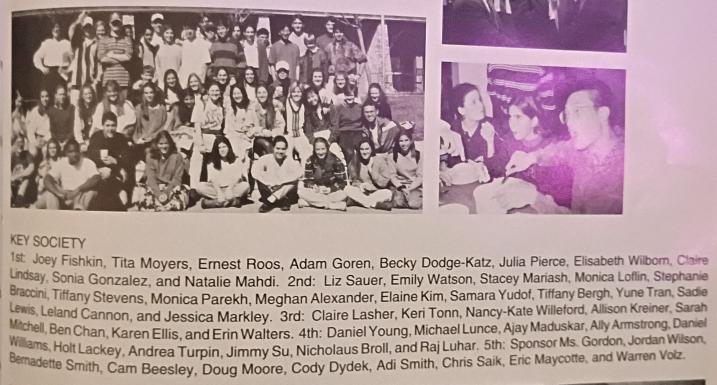
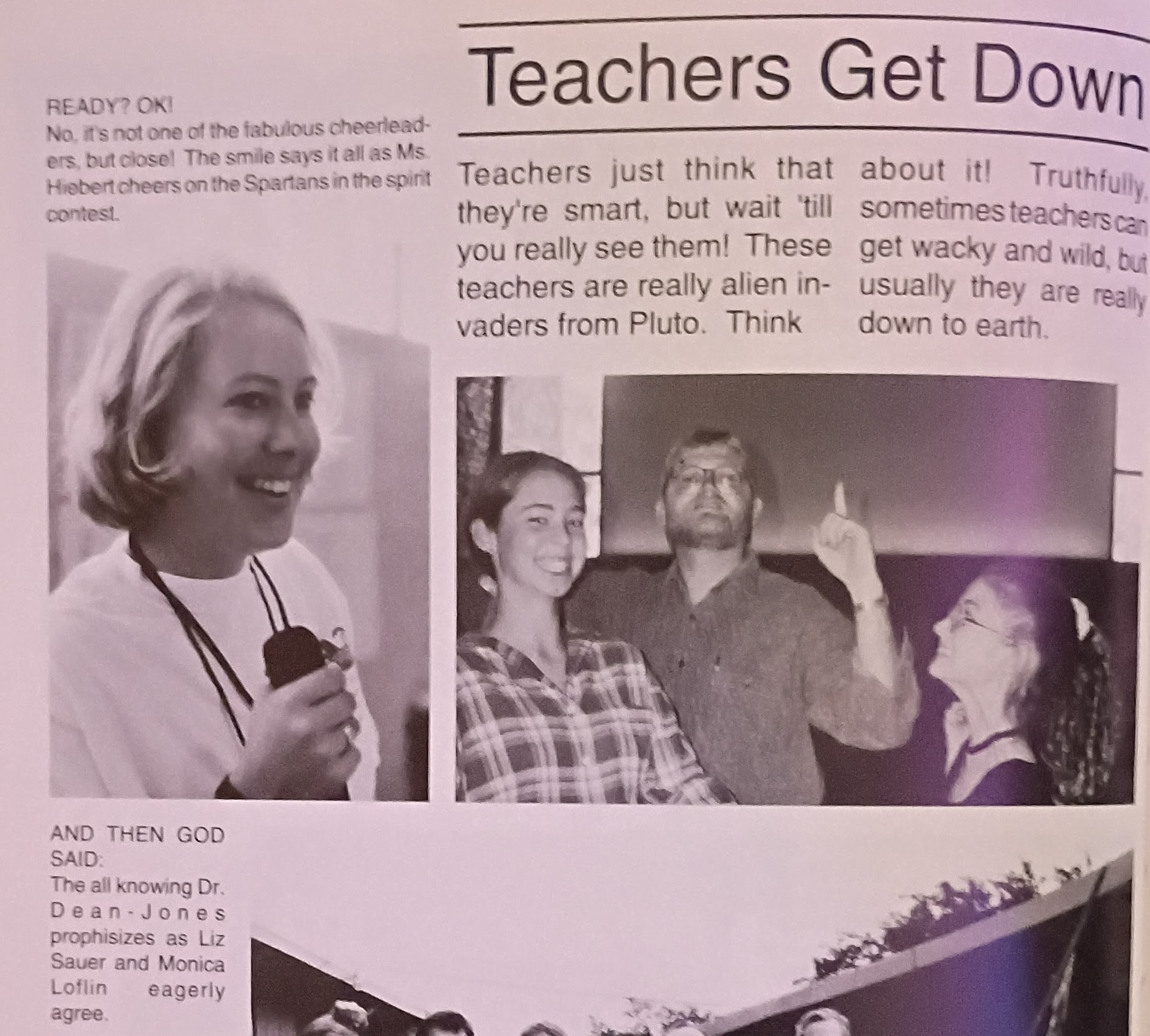
About the beginning of April, the St. Stephen's headmaster demanded that Liz and Cole be expelled for allegedly smoking marijuana on campus. The accuser was anonymous. (The rest of her life Liz maintained that the specific accusation was false.) Faculty and the head of the middle school tried to intervene on behalf of Liz and Cole. We consulted an attorney that advised against trying to keep Liz and Cole at St. Stephen's. Reluctantly, we acquiesed and enrolled Liz in Anderson High. The headmaster disengenuously suggested Liz could return in the fall, but St. Stephen's did not respond to our attempts to pursue. Cole's parents insisted that Liz and Cole stop seeing each other, so Liz' best friend and entire social environment were gone.
 |
 |
 |
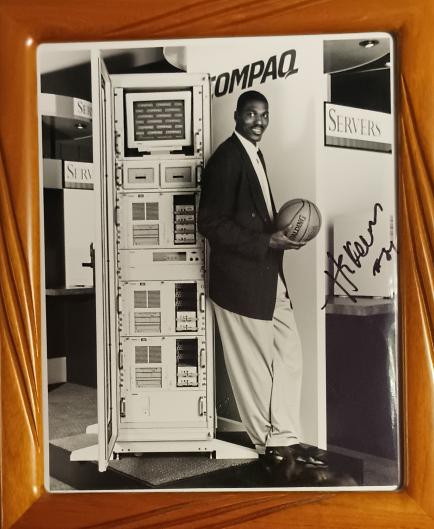
Danny Diaz and I went to an Intel event at a Manhattan trade show where we both got to meet Hakeem Olajuwon at the Compaq Computer booth. Danny was a Rockets fan so he was especially pleased. Though I was and continue to be a Spurs fan, meeting Hakeem was still a special moment.
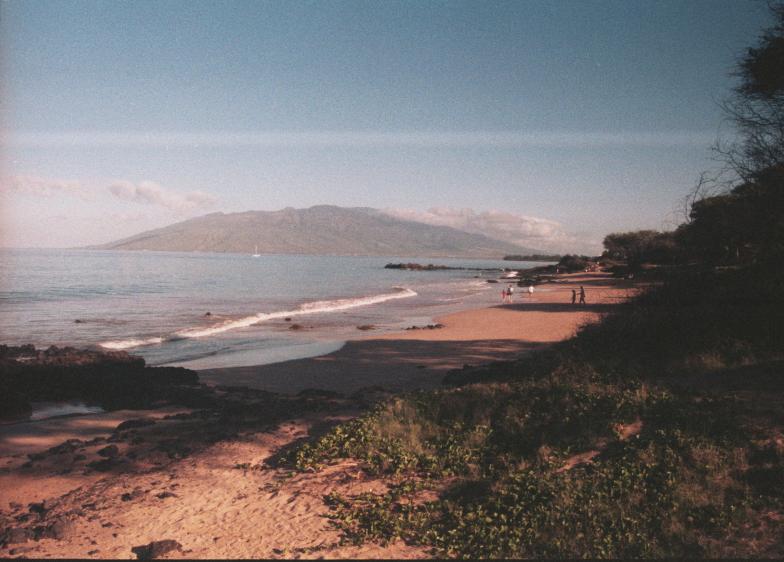
Caroline, Liz and I went again to Hawaii for a week at the Kamaole Sands.
Andy Grove and Intel hosted a gathering at a hotel in Santa Clara to promote the Internet and multimedia on the Internet. Jeff Bezos spoke about his fledgling Amazon Internet book store. Halsey Minor introduced his new CNET.com site. The event even included Keb' Mo' performing, my first wareness of him.
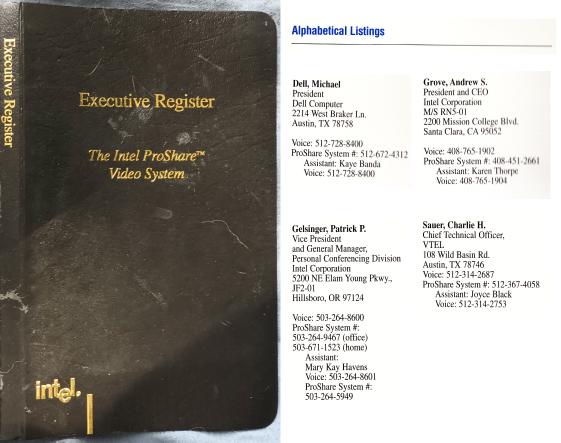
As part of promoting ProShare, Intel published a directory of executives with ProShare systems. The "Executive Register" included ISDN contact information and had entries for Michael Dell and me, along with many others. One day I was sitting at my desk and received a call from Michael, wanting to try out his ProShare system. Though there ahve been infrequent airport and electronic encounters since, I think that was the last substantive conversation I have had with Michael.
VTEL had long provided system support in video conferences for sharing documents and still images, including ad hoc annotations on the shared items. ProShare included analogous facilities. However, it was clear that the industry as a whole required a standardized approach. That would be the International Telecommunication Union’s T.120 series of recommendations. DataBeam was a company seemingly founded for the sole purpose of providing T.120 software. As far as I know, DataBeam was the only company implementing T.120, with all the relevant companies licensing software from DataBeam. I negotiated a license with DataBeam and we began preparing to include T.120 support in our Windows-based products.
Microsoft (Brad??) sent me an invitation. Caroline came along, even though I could not bring her to the private portions.
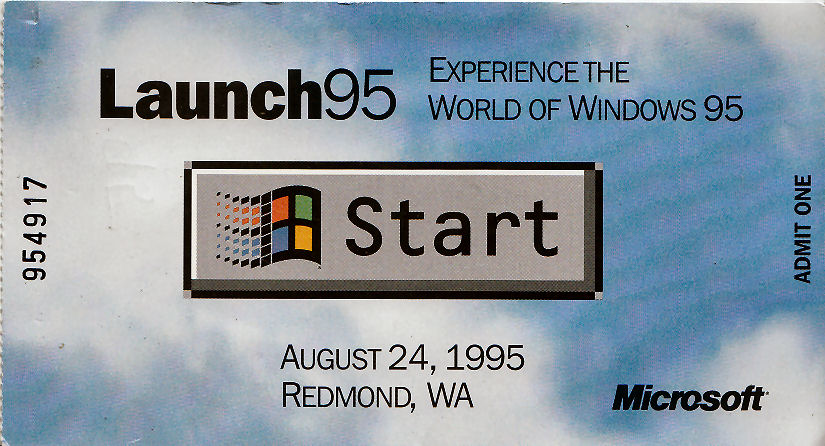
I still have fond memories of the whole "Chicago" experience, from 1993 up through Windows 98. I wish my Jurassic Park screen saver would run on current Windows, but I can still experience Windows 95 and the screen saver on legacy hardware:
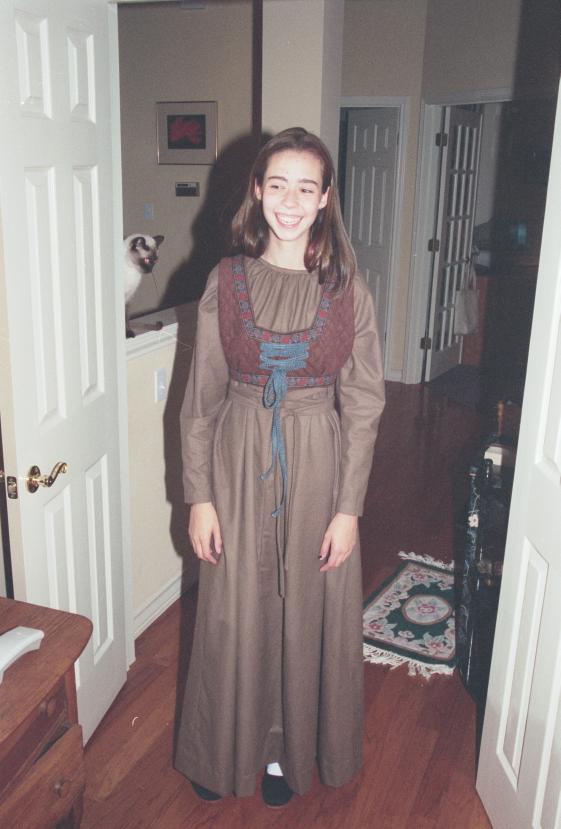
Liz returned to Anderson High for 10th grade. We were assuming she was doing ok until we accidentally found out she was not going to school at all! One of her classes had plans for a "Medieval Faire." Caroline created an elaborate costume for Liz to wear. The costume included a wooden sword. The morning of the event, Caroline discovered that Liz had left the sword at home, so she took to Anderson. Imagine her (our) surprise when they told that Liz not only was not there that day, but had not been there in quite some time. Caroline started calling the office every day to verify Liz' attendance, threating Liz that she would be escorted to class if she did not go on her own.
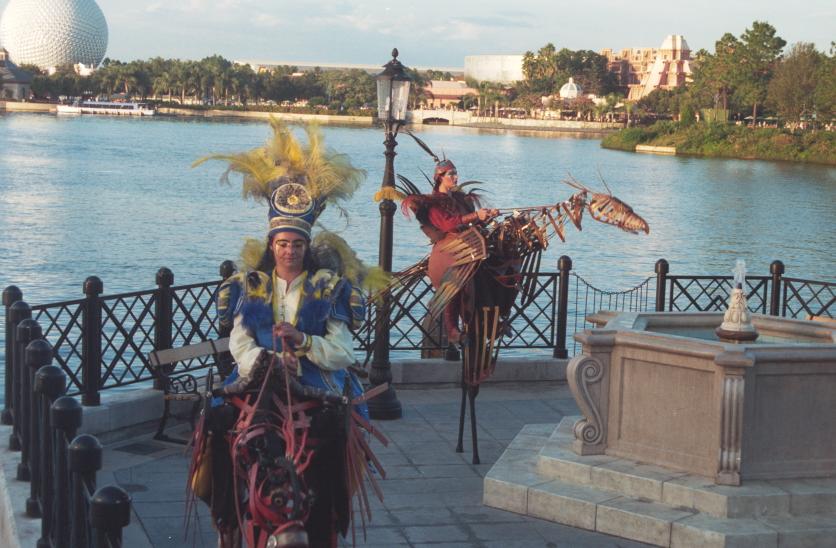
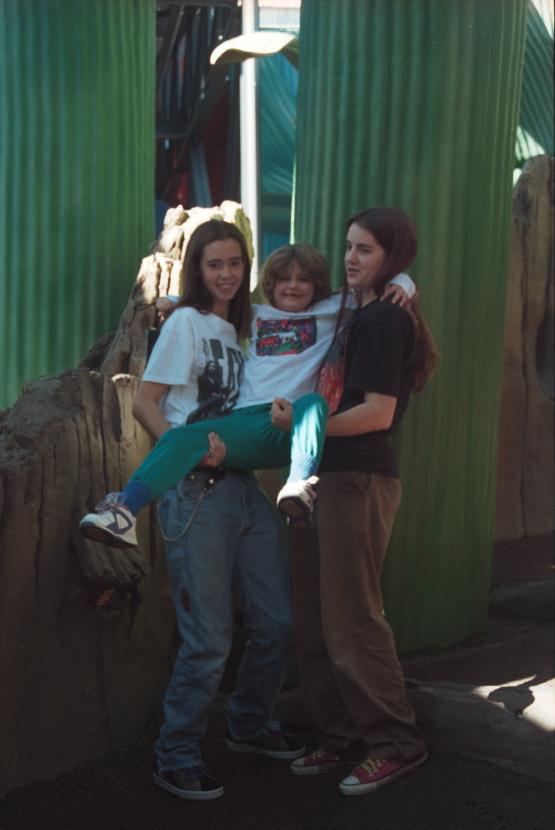
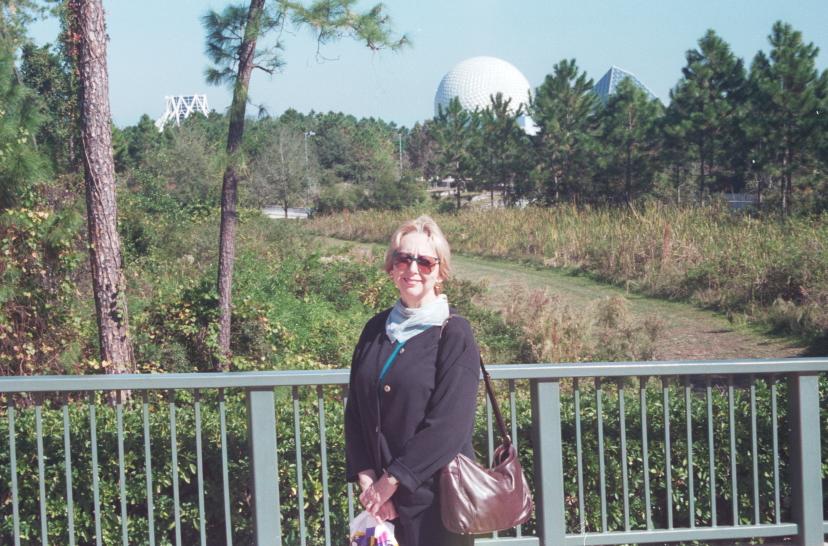
We met Lucy and Hannah at Disney World for Thanksgiving. Liz' new friend Mary Avery from the past summer camp accompanied us.
 |
 |
 |
From a personal professional perspective, the big news in December was the merger of PCWG and IMTC. Al Korenjak of Intel was perhaps the most important person in effecting the merger. I had a part in the negotiations and was named vice-president of the combined organization named IMTC.
1996 would be a most eventful year. Towering over everything else, Mom died unexpectedly from sepsis in February and Big Mom succumbed to her two year battle with lung cancer on Christmas Eve.
https://technologists.com/photos/1996/sm2ndviewfromMunichHotelFeb96.html
March T.120
https://www.cedmagic.com/mem/whos-who/korenjak-al.html
??https://news.microsoft.com/source/1996/03/11/more-than-100-leading-companies-join-intel-and-microsoft/
McCallum
Back to Top
Copyright © 1995-2026 Charles H. Sauer. All rights reserved.