The 1960s were an adventure: beginning to "find myself" in Maryland, then experiencing Palo Alto, then family moving to Missouri, then college: Minnesota -> Missouri -> San Francisco -> Austin, with so many facets and experiences along the way.
In 1960, Glenridge Junior High opened up and I fit in better for eighth and ninth grade. Though three miles by nominal routes, there was a viable shorter route using a tunnel under the Baltimore Washington Parkway. I was acceptable as a soccer defender. I moved up to first chair clarinet in band. I got to play in various band and individual county level competitions at the University of Maryland.
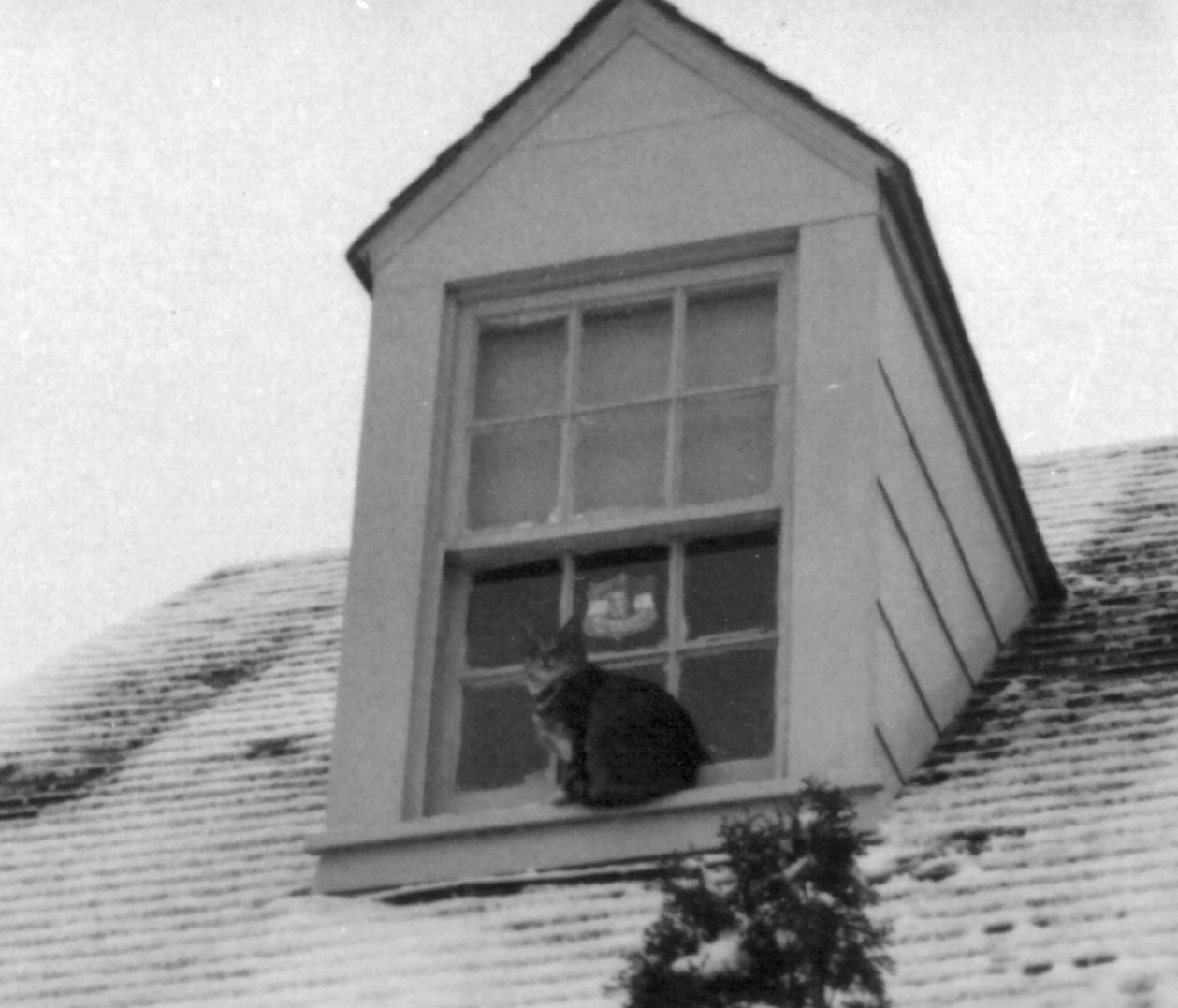
Though I think we had cats (Jack?) before Boots, he was my first favorite cat. The earliest photo I have of him shows him waiting at my window to be let in the house. Note the Kennedy Johnson campaign sticker on the window behind him.
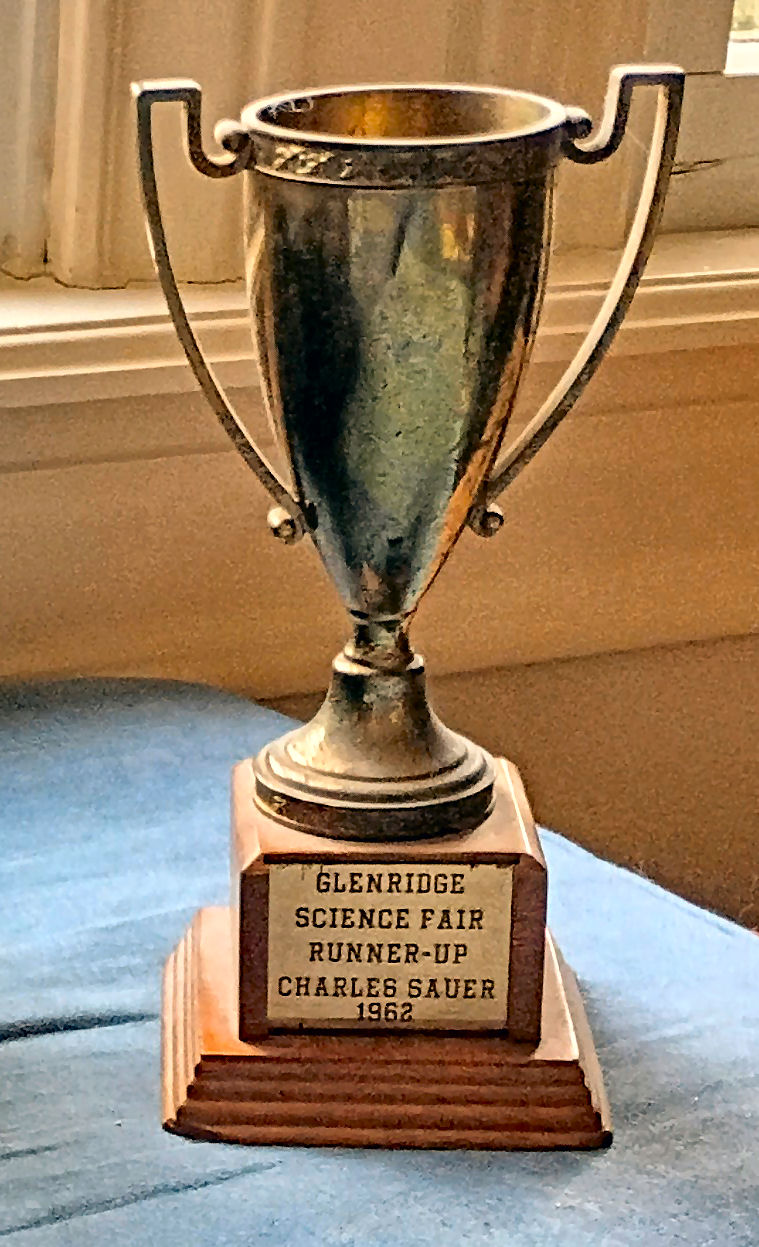
As my chemistry projects got more sophisticated, I won prizes in school science fairs and even one county science fair, if I recall correctly. However, I was frustrated by the limitations of my chemistry set, particularly that I only had an alcohol lamp to heat things — I didn't get access to a Bunsen burner until sophomore year in high school. Once I discovered amateur radio, my electronics activities seemingly took precedence over chemistry.
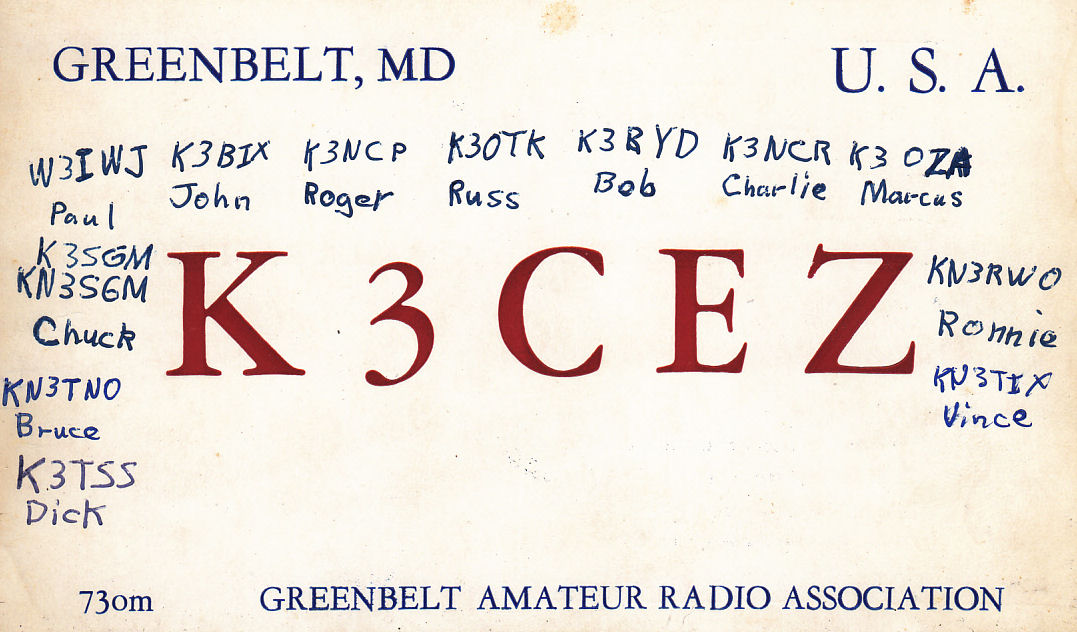
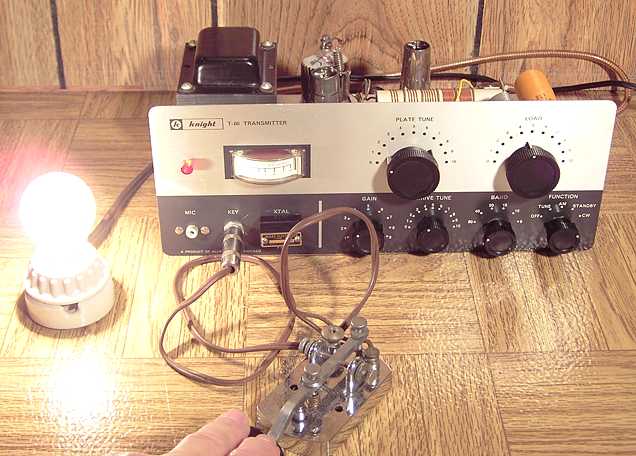
With a Novice level license (KN3SGM), I was effectively limited to Morse Code on the 40 Meter (7MHz) band. I built a transmitter from scratch from a project in The Radio Handbook (William Orr, Editor). That effort got me to the county science fair, but didn' win a prize, if I recall correctly. The longest side of our pentagonally shaped lot allowed me to put up a 40 Meter dipole antenna. I built a Knight T-60 transmitter from a kit.
After my Novice level year was up, my Morse Code proficience still wasn't up to the 13 words per minute then required for a General license. I did get a Technician level license (K3SGM), which allowed voice on the 6 Meter (50 MHz) band. My receiver only went up to 30MHz, so I built a 6M (50MHz) to 40M (7MHz) converter. I fashioned a directional antenna and rotator and attached the antenna to our chimney.
Though I had some social life in the school band, with neighbor kids, and the Saturday night Greenbelt Amateur Radio Association gatherings, it seemed my primary social life was on my radio, mostly older people in the D.C. area, occasionally some much further away when signal propagation allowed. Electronic communication has continued primary for me to this day. (Of course, now it is typical for people to use their cell phones and computers as primary communication and social environments.)
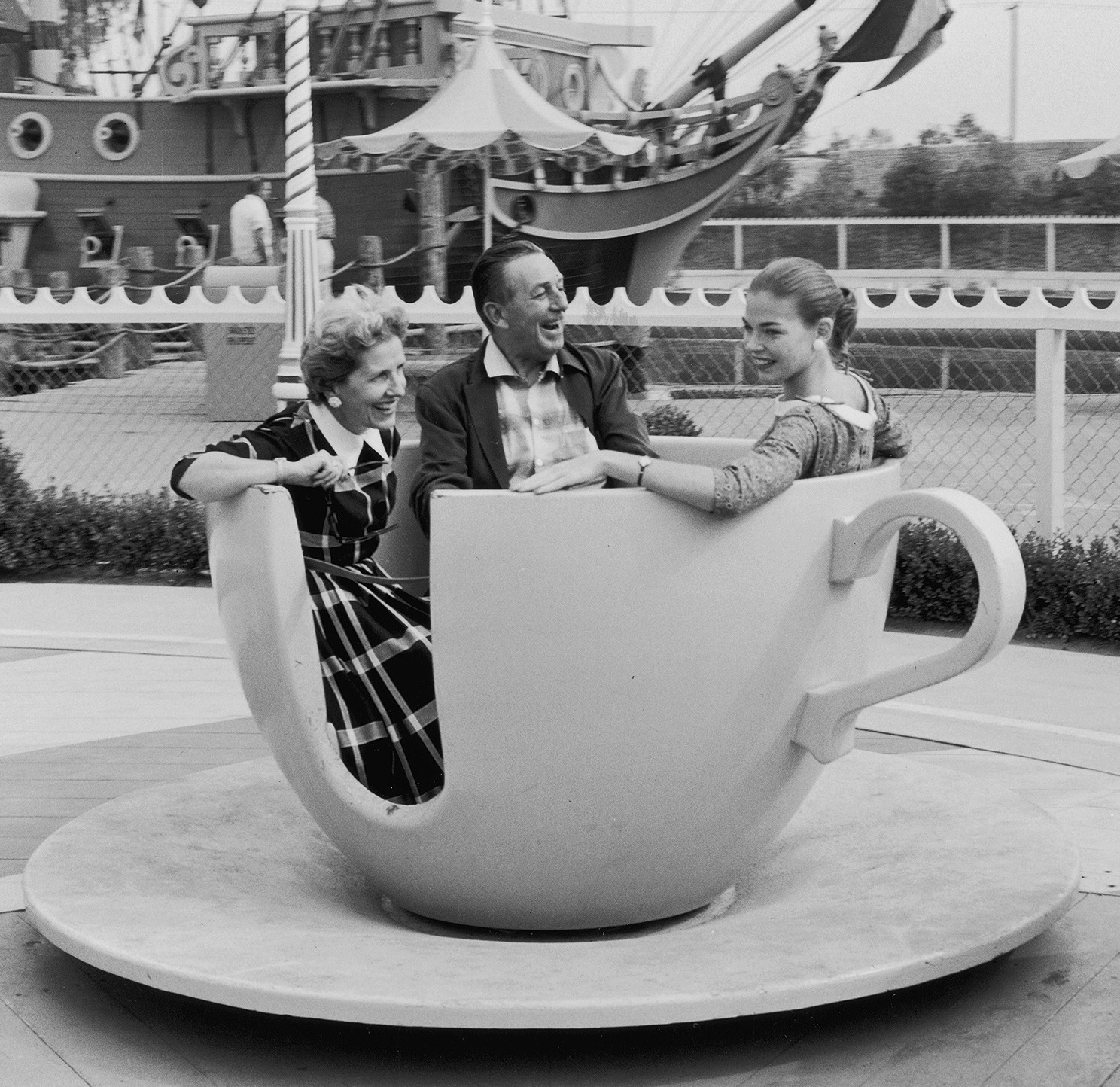
Our family spent the summer of 1962 in Palo Alto. We'd visted family in Orange County in previous years and even met Walt Disney on the Tea Cups in Fantasyland — older cousin Jane was a vice-president in the Disneyland Bank of America. Actually living in California was a dramatically new and delightful experience. We went there so Dad could take courses at Stanford. We got to witness Wilma Rudolph's heroics at the United States-Soviet Union dual track and field meet. Even more important to me at the time was taking high school biology at Cubberley. We rented a house across the street from the school, so it was easy to immerse in the course and socialize with other students. In the evenings we'd walk to Mitchell Park for chess with the teacher and more.
Near the end of our delightful summer in Palo Alto, Lucy and I were told that the family was moving to Columbia, Missouri for Dad's new position at the Ecology Field Station being established there by the Federal Public Health Service. Besides Dad's professional opportunity, this appealed to Mom as moving to a small midwestern city, more akin to the places she'd liked living in previously, vs. the eastern urban area surrounginding D.C.
I was dismayed by this news and all of the difficulties transitioning. We were house hunting in early August, with temperatures approaching 110F. The house most appealing to Mom and Dad had no air-conditioning. I think the biggest appeal to them was the wooded setting in a valley above a creek, with no buildings visible in the back. But that exacerbated the amateur radio obstacles — not only were there relatively few local "hams," getting a good antenna would be impractical. Dad helped me put up a much better 6M antenna than I had had in Maryland, but the antenna was still nestled in the valley and relatively ineffective.
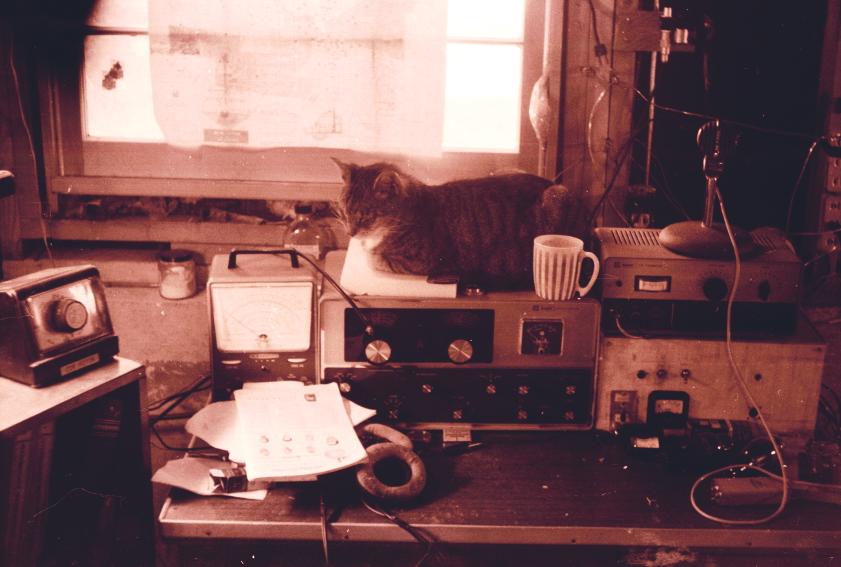
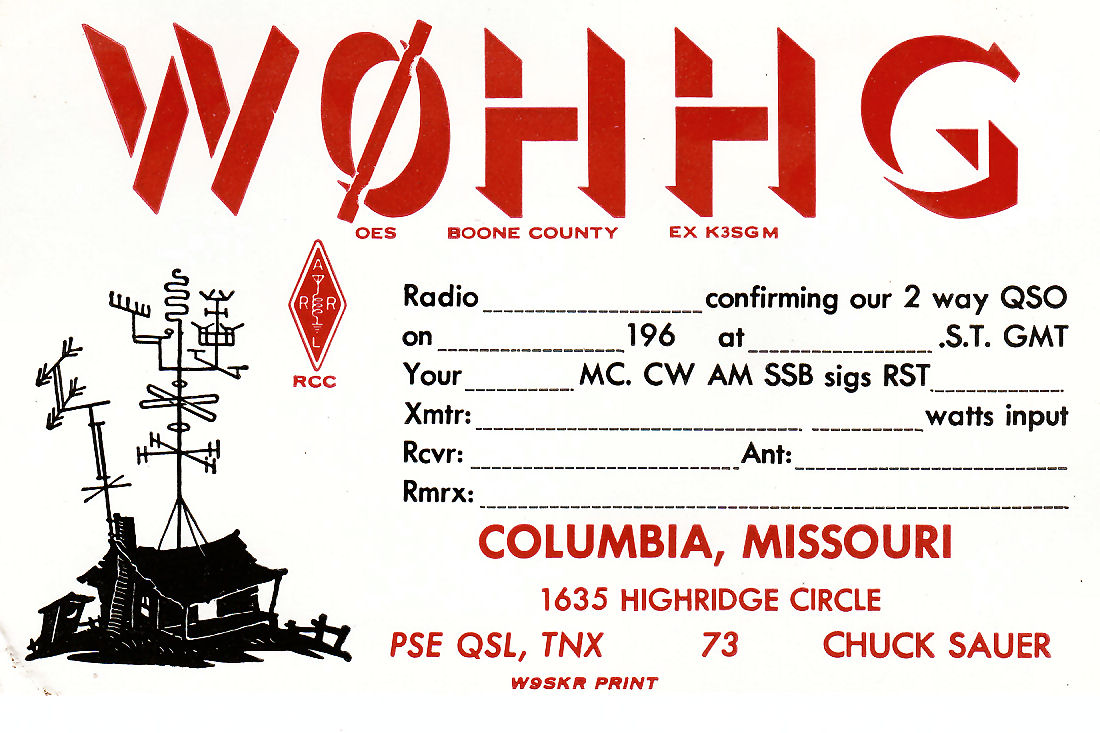
Since I had ended up with the larger, nicer bedroom in Maryland, it seemed fair that Lucy get the nicer, larger corner bedroom, while I got a smaller room with lesser view and ventilation. However, the basement was relatively large, with windows and an outside entrance, so it wasn't long before I moved my bed and all my things into a large corner of the basement. The photo here shows the antenna rotator control, my prized Heathkit voltmeter, Boots on top of the KnighKit receiver that displaced the Heathkit one, and the rest of my gear, on top of the same desk, with the unfinished wall visible. The new location meant giving up the K3SGM call sign, and getting W0HHG, indicating the new region of the country.
Inevitably, it was challenging to adjust to a new school, in a new city, in a new state, ... I had already decided to not play clarinet in high school band. Algebra II was nominally for 11th graders, but since I'd already had geometry in Maryland, I was placed in Algebra II with the inspiring but crotchety Nellie Kitchens teaching, and mostly older students, but a few 10th grade students my age. Analogously, since I'd just excelled in biology in Palo Alto, I was placed in the nominally 11th grade chemistry class (and finally got my hands on a Bunsen burner). Otherwise, I was dismayed by the generic classes I was placed in, knowing that there were more academically challenging courses not available to me. The following summer, a peer from the chemistry class suggested we take the beginning college chemistry class at M.U. (University of Missouri - Columbia). We did, and got the highest grades in that section, to the dismay of the M.U. students. In 11th grade I took calculus, again from Nellie Kitchens, and physics. Besides those, there was little more of high school that was academically memorable. The chemistry peer and another friend decided to leave after 11th grade, to start at M.U. a year early.
There were outside influences that had dramatic effects on me. A local folk singer, Lee Ruth, performed "What Have They Done to the Rain" at a "ban the bomb" event at the M.U. Student Union and I started getting to know activists at M.U. The Beatles began to transform popular music with their February 1964 television appearances on Ed Sullivan. Though perhaps not of the same social magnitude, as important to me was first hearing Bob Dylan, at a friend's house one Saturday morning after she had just obtained The Times They Are a-Changin'.
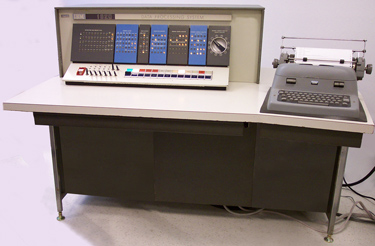
In the spring of 1964, a professor in the M.U. Electrical Engineering department invited several of us to come on Saturdays to learn about programming, using Fortran on an IBM 1620. I hated it, and stayed away from programming until 1971 when I gave up trying to make money in the music business.
Columbia seemed to work out for Mom and Dad even better than they imagined. Dad was successful with his research, got funding and recogntion in spite of not having the doctorate usually associated with such efforts. Mom resumed teaching nursing as a part-time professor. She established a Visiting Nurses Association in Columbia. They made a host of friends, most notably Rev. Mel and Barbara West.
While finishing high school, I was more than ready to start college out of town. I applied to M.I.T. and was accepted, but convinced myself I should go to a smaller liberal arts school. The M.I.T. process did lead the "briefcase gang" to give me one of my enduring nick names, "Wohhg" and associated variants[1]. I narrowed my interest to Reed in Portland, Oregon, and Carleton in Northfield, Minnesota. I took a train trip to visit Reed and then Carleton. Something about Reed put me off. Carleton seemed more promising. The older friend who introduced me to The Times... was there, and another friend from high school was already there. Miss Kitchens surprised me by giving me the senior "Blue Triangle" award for math after I scored fourth in the state on some standardized test.
In many ways, choosing Carleton seemed a mistake before, when I got there, and afterward. That said, Carleton seeded much of my future.
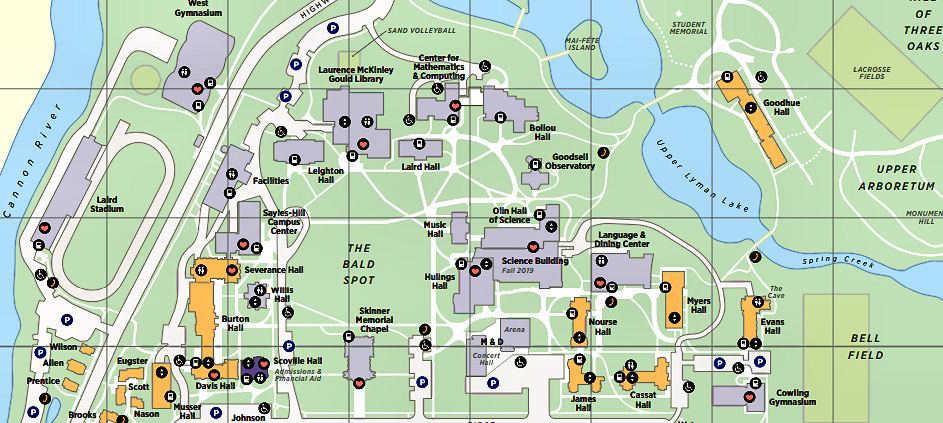
Though Missouri can get very cold in the winter, I wasn't prepared for the Minnesota winter, or even needing a coat in September. Like almost all first year men, I was placed in the Goodhue dorm, far from the center of campus and the other dorms. My designated roommate was a fan of Leroy Van Dyke. Initially, I hated that music but years later came to appreciate "The Auctioneer," if not the rest of Van Dyke's repertoire. I don't remember much positive about any of my courses. I placed out of the introductory math and science classes. When I finally had a math course in the third quarter, it seemed too formal and far removed from the engineering oriented pragmatics of my prior experience.
Before Carleton, with the "British invasion" of the Beatles et al, my musical awareness had expanded dramatically to include the Animals, the Rolling Stones, and especially, the Yardbirds. Being absorbed in Dylan's music led me to discover Woody Guthrie, Pete Seeger, Odetta, Tom Paxton, Phil Ochs and many others. However, the times at Carleton took my awareness to a new level. For example, before Carleton, I was vaguely aware of Lightnin' Hopkins and Muddy Waters. Soon after my arrival I saw a bulletin board notice that a senior was selling her collection of Lightnin' & Muddy LPs -- I still have those.
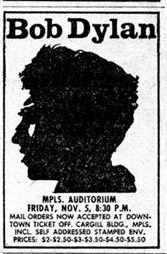
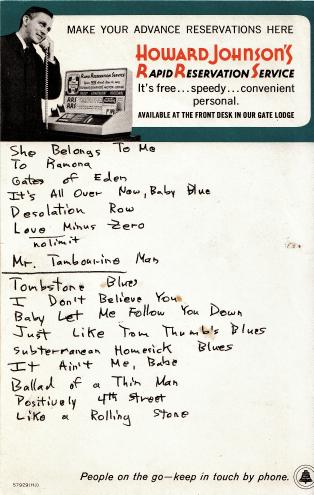
In mid-October, I saw a newspaper ad that Dylan was coming to Minneapolis! Carleton students weren't allowed to drive, but there were chartered buses to take us to Minneapolis Fridays and Saturdays. I put up a bulletin board notice suggesting that interested students get a block of tickets and go together. The friend who first played The Times... for me and eight others went along, including sophomore Angela Strehli -- our first encounter.
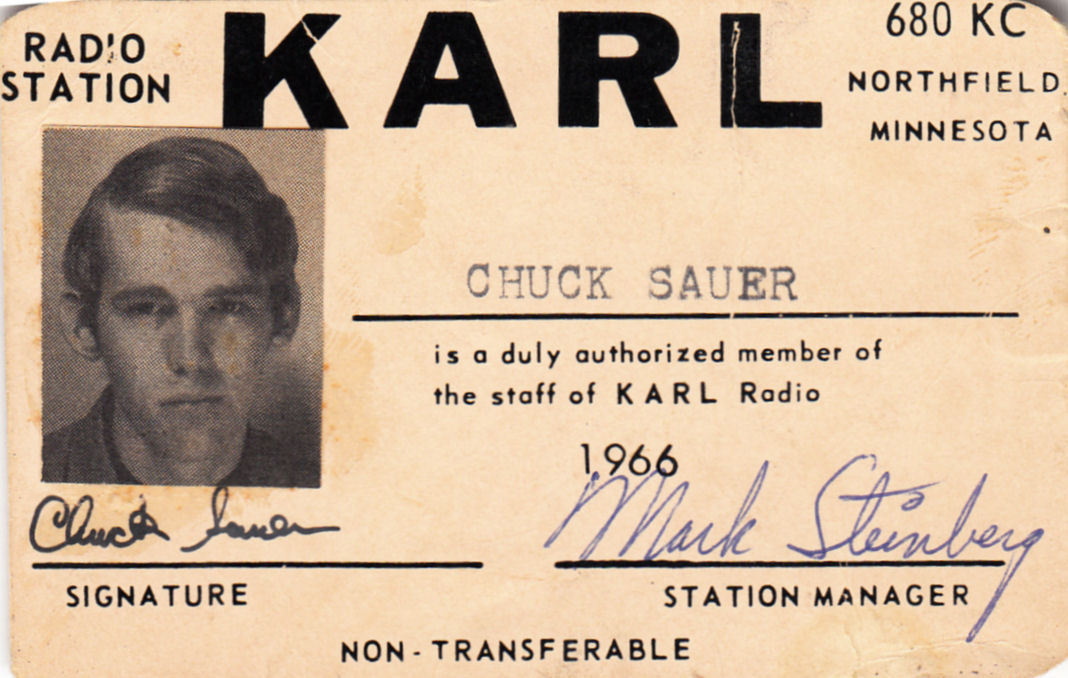

There was a call to audition for volunteer staff positions at the campus carrier current AM radio station, KARL. I was selected as a DJ and named Chief Engineer. There was a new mixing console that a graduated senior had designed, created, left in a semi-usable state. It had terrible overheating problems and we did all we could to get airflow through the cabinet to make it usable. KARL was mostly off the air, with us fixing things, until January. (The signal cable to Goodhue was defective that entire year, probably well before that year. Eventually, I spent several days trying to diagnose and fix the cable at the end of the year before I gave up and left Carleton for the last time.)
Winter break was at least a couple of weeks. Some student activist organization was looking to recruit/subsidize someone to go to Barnwell County, South Carolina, to assist NAACP with voter registration. Before going to visit my parents, I took a bus to S.C. to assist NAACP efforts. When back on camplus, I wrote a surly summary of the trip for the Carletonian:

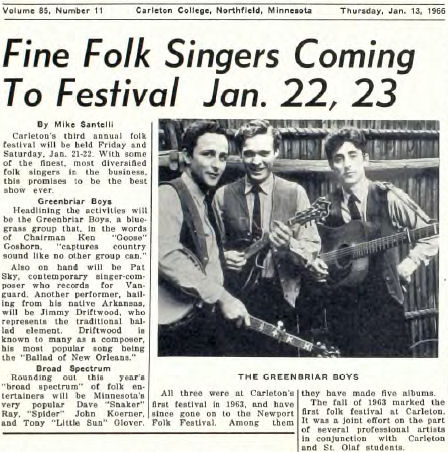
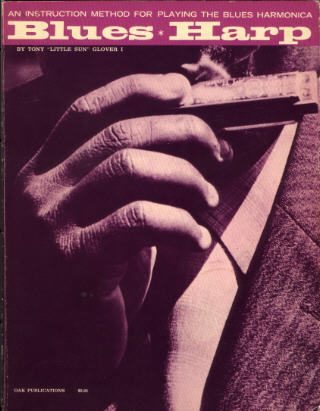
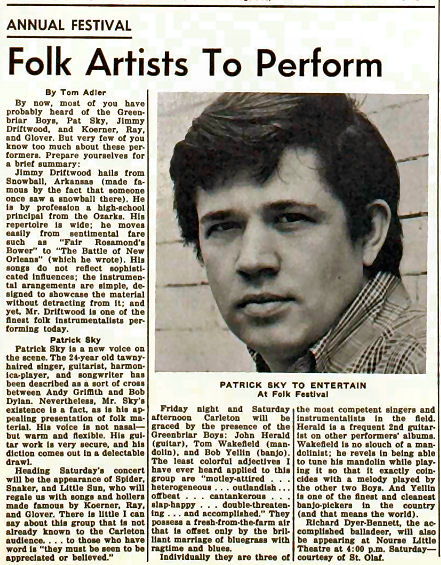
Among the other special benefits of the Carleton environment were the fine concerts: Mose Allison, Carlos Montoya, Thelonious Monk and others. There were elaborate annual Folk Festivals -- January 1966 was astonishing: Jimmy Driftwood, The Greenbriar Boys, Koerner, Ray and Glover, and Patrick Sky. Though I had Patrick's first LP, I didn't recognize him casually sitting at the edge of the stage -- I told him he "played pretty good."
 |
 |
 |
 |
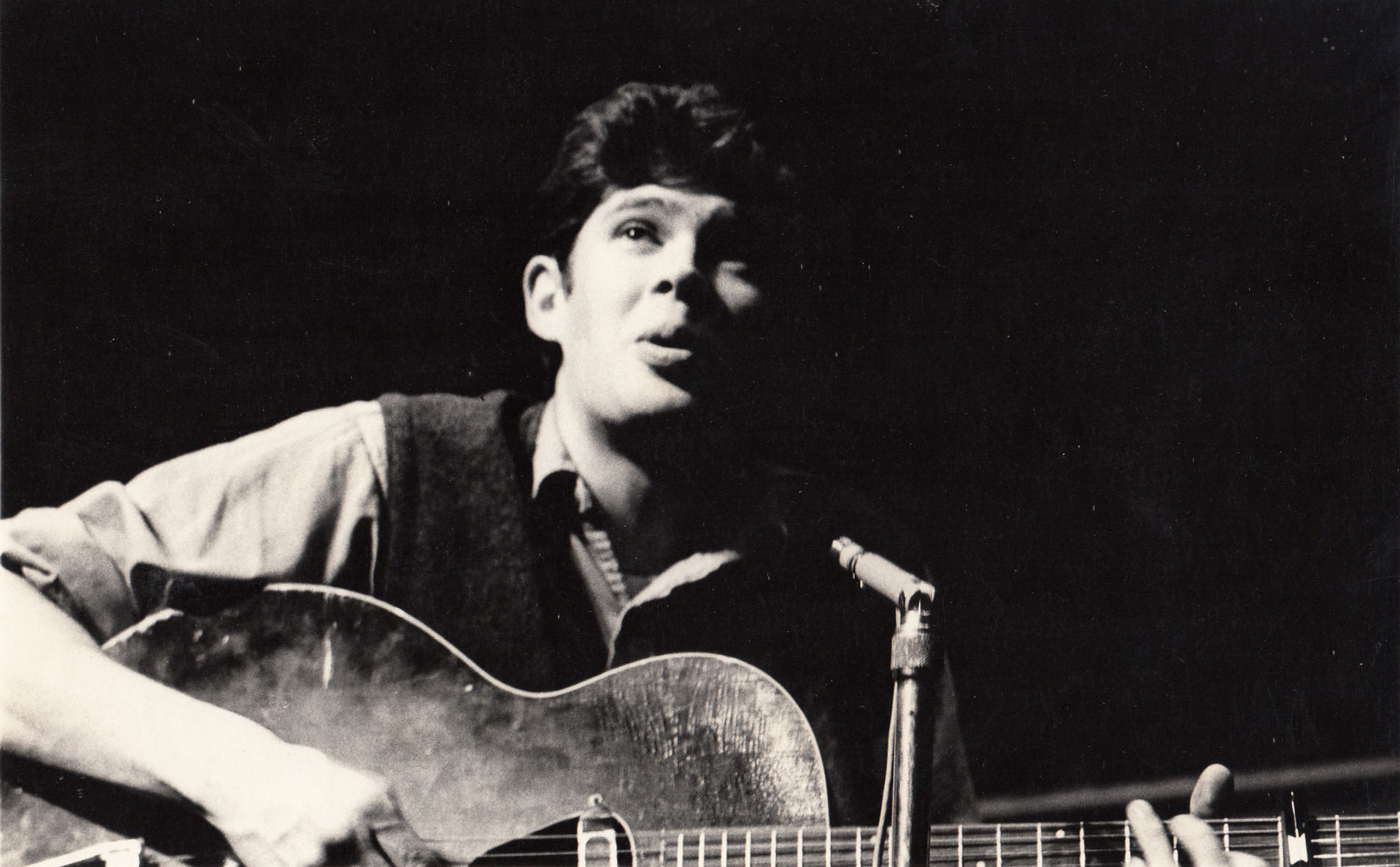 |
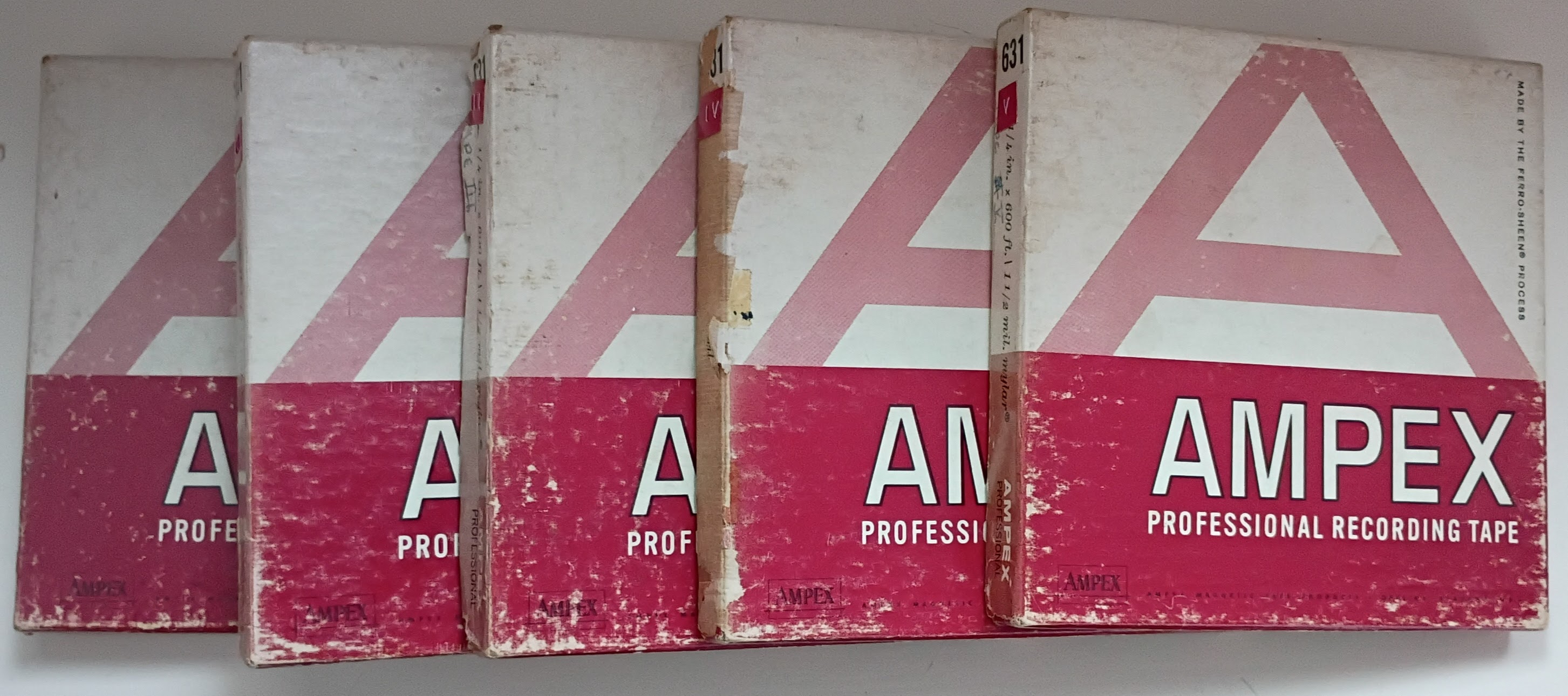
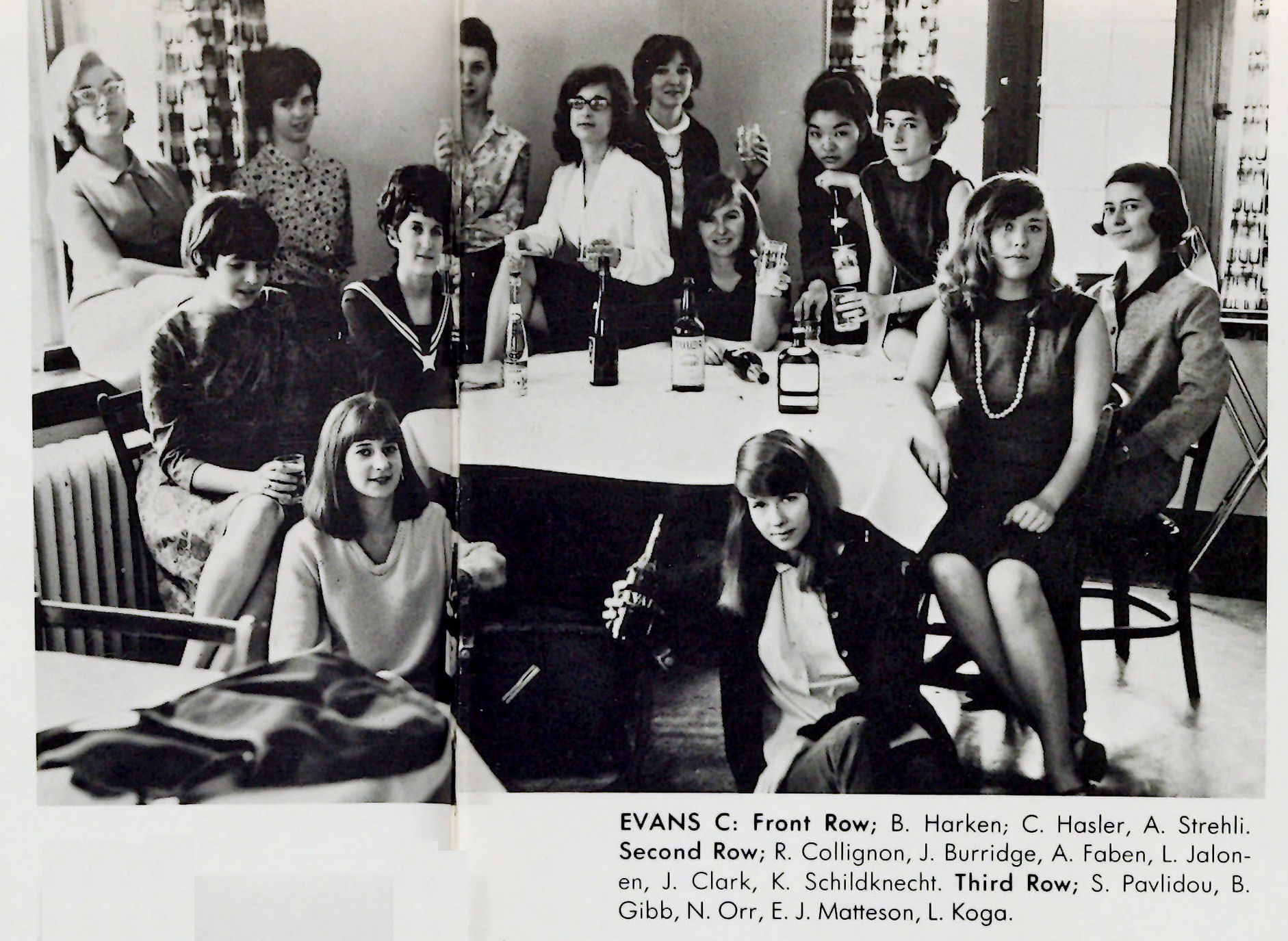
In January, when KARL was functional — "'Best Ever' KARL Back" according to the Carletonian, I took on several shows as a DJ. Most notable was my Saturday night show I called “Following You Down” with the intro music taken from the Dylan version of “Baby Let Me Follow You Down” off his first LP. Mostly it was acoustic blues and things that would now be called "Americana." Soon Angela suggested she help with the show, handling the console, turntables, etc. "Help" is quite the understatement — the depth and breadth of her knowledge far exceeded my own. Eventually, she made a set of tapes for me of Robert Johnson, Big Joe Williams, Sonny Boy Williamson, Lightnin', Howlin' Wolf, Muddy, John Lee Hooker, Jimmy Reed, Little Walter, Chuck Berry, Clarence "Frogman" Henry, Buster Brown, Bo Diddley, and Ray Charles.
In February, Angela and I took the chartered bus up to see Tony Glover at the "Triangle Bar" in St. Paul. Walking back across the bridge to the bus in Minneapolis was the most bitter cold I've ever experienced. When it was warmer, we got Dave Ray and Tony Glover to come back to Carleton and play at an outdoor party in the "Arb" behind Goodhue. But we both separately decided not to return to Carleton. She went to San Antonio for the summer, then on to Austin and U.T., and I returned to Columbia.
I don't really remember how or when I decided not to return. Two friends and I had arranged to be sophomore roommates in a very desirable room usually only available to upper class residents. I must have thought I was returning to Carleton when we arranged that. Though I don't remember communicating with either one of them after leaving Carleton, I was told that one of them died in Vietnam — I assume he was drafted. Also, I took a "KARL" toolbox to Columbia with me, which I still have, so when I did that I must have thought I was returning.
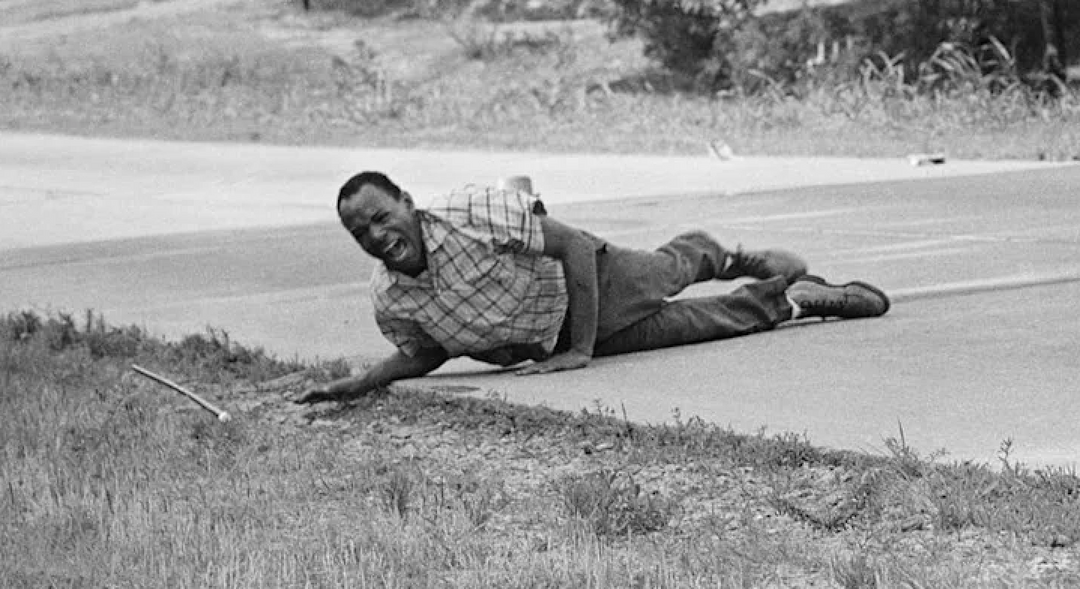
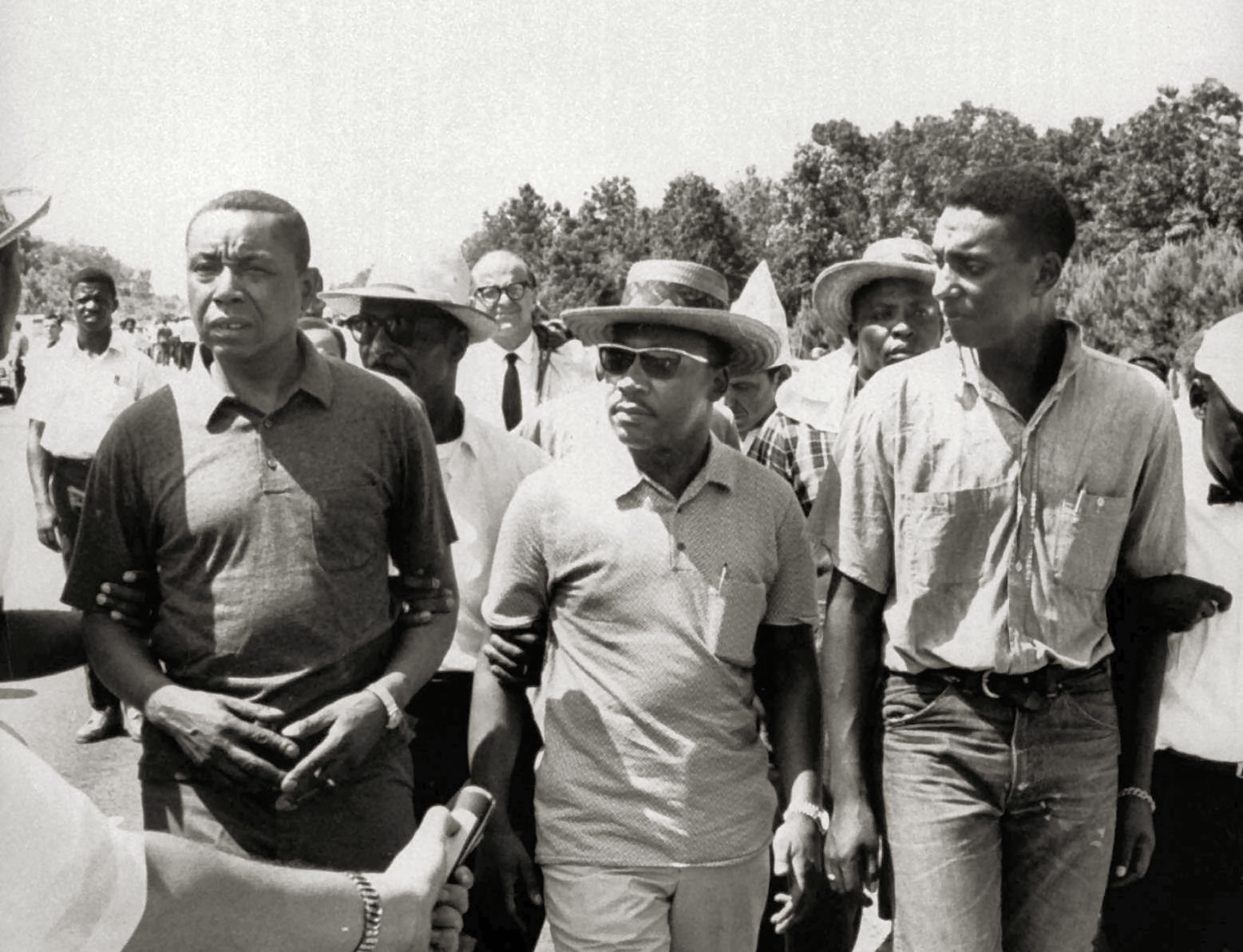
I got a relatively well paying summer job laying carpet in a building under construction. Then James Meredith was shot June 6th on the second day of his solitary March Against Fear. When Dr. King and others continued the March Against Fear after the shooting, a few friends and I decided to join the March. One night, there he (Dr. King) was, in the flesh, sitting on the back of a large truck. About ten of us gathered around to listen to him, as I recall[2].
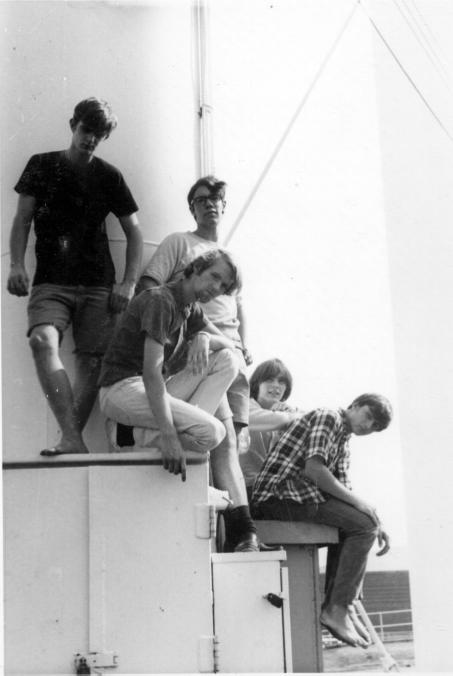
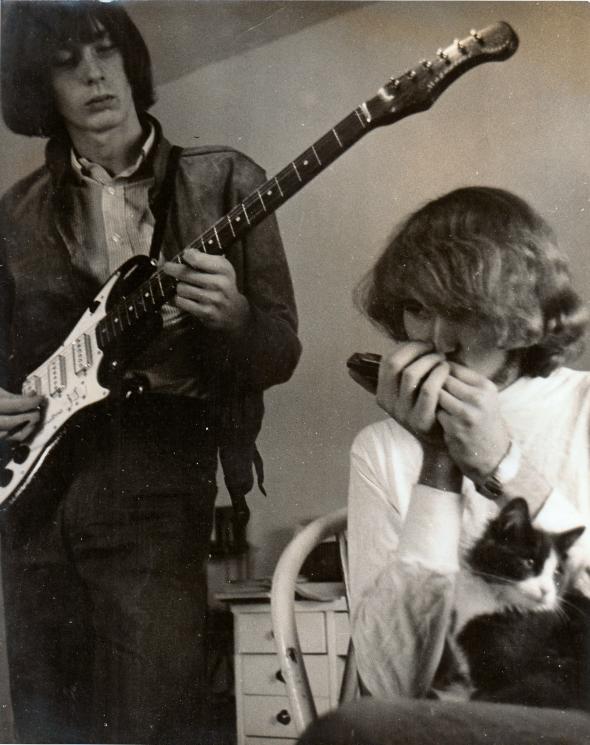
Mark Swanson, my best friend in high school and class valedictorian, had gone to Caltech for his first year but decided not to go back. We decided to try to start a band, Mark playing guitar and me playing harmonica. We got our friend Mickey Perry and a couple of other guys to join us. We played one gig that I remember, a block party up the street from my parents' house. We played mostly songs off the recently released Blonde on Blonde. We were terrible...
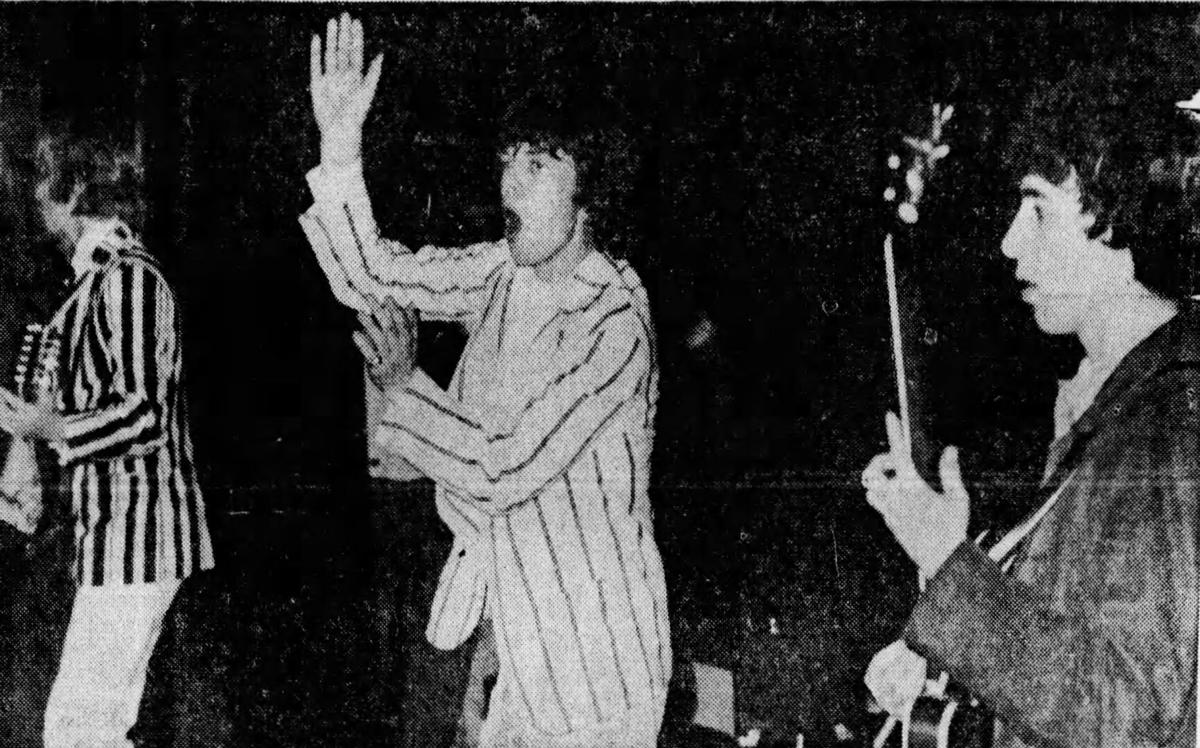
In spite of the success of "Satisfaction," the Rolling Stones were not yet phenomenally popular. Kiel Audiorium in St. Louis, capacity 10,500, was only half-full when we we saw them July 12, 1966.
I still had no good ideas of what to do academically. I know I took psychology and sociology courses, but barely remember them. Finding friends and figuring out how to have a better band were much more top of mind. Mark and I started hanging out at the M.U. Student Commons and soon met Robin Rice and "Hobby" (Nancy Habenstein), who were faculty kids and had graduated from "U-High" (high school for faculty kids) ahead of us. Robin would become my life long friend. Mark and Hobby would wed not long afterward.
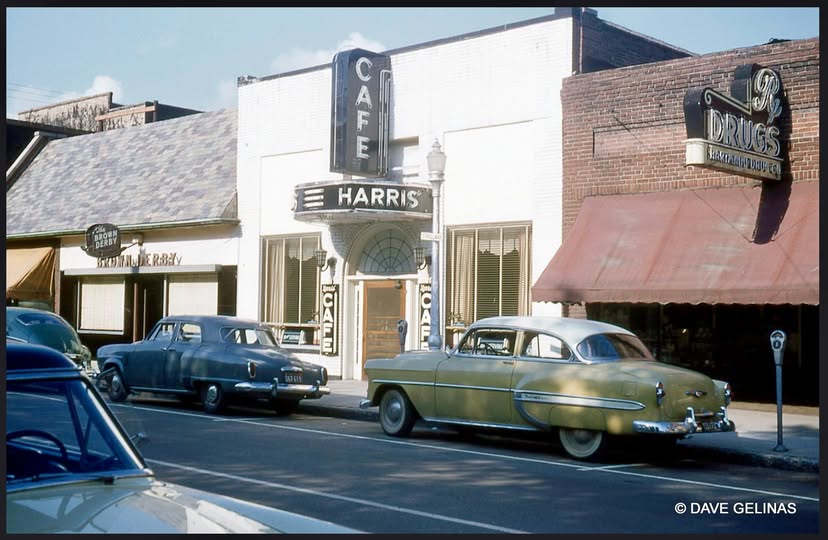
Perhaps the biggest excitement for us was Cafe Harris briefly becoming a folk music club that fall. We didn' know it was Arlo Guthrie's first gig when he played there a week, but we went every night, as we did when Ramblin' Jack Elliot played a week at Cafe Harris. We had unrealistic visions of Columbia soon becoming an important cultural center.
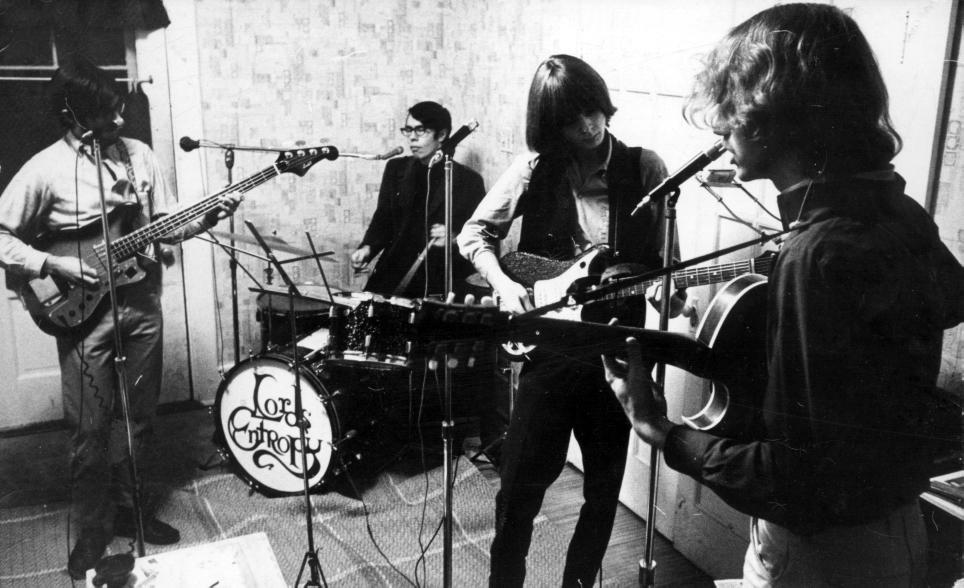
Mark, Mickey, our friend Dennis Snell and I started a new band, "The Lords of Entropy." Robin designed a logo for us, painted it on Mickey's bass drum head and on a sweatshirt I still have. We were enough better to get some regular gigs, but not really very good, and broke up after a few months.
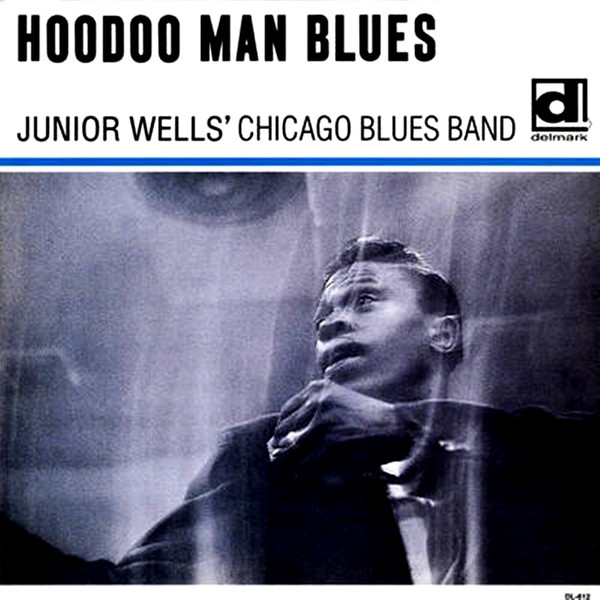
Angela was at U.T. in Austin, but we had kept in sporadic contact. She had arranged for a trip to Chicago for Bob Koester, producer of Hoodoo Man Blues, to take her to blues clubs. (That LP by Junior Wells and Buddy Guy was a risky project for Koester, but turned out to be his best success, hugely important in blues history, and particularly influential for me and my friends.) I invited myself along — Koester was obviously displeased but tolerated my presence. The first night we went to Pepper's to see Muddy Waters. Pepper's wouldn't admit this underage white boy, but I listened outside while Angela and Bob were admitted. The next nights we went to Silvio's to see Howlin' Wolf and Theresa's to see Buddy Guy. I was admitted to those clubs and totally in awe of Wolf and Buddy.
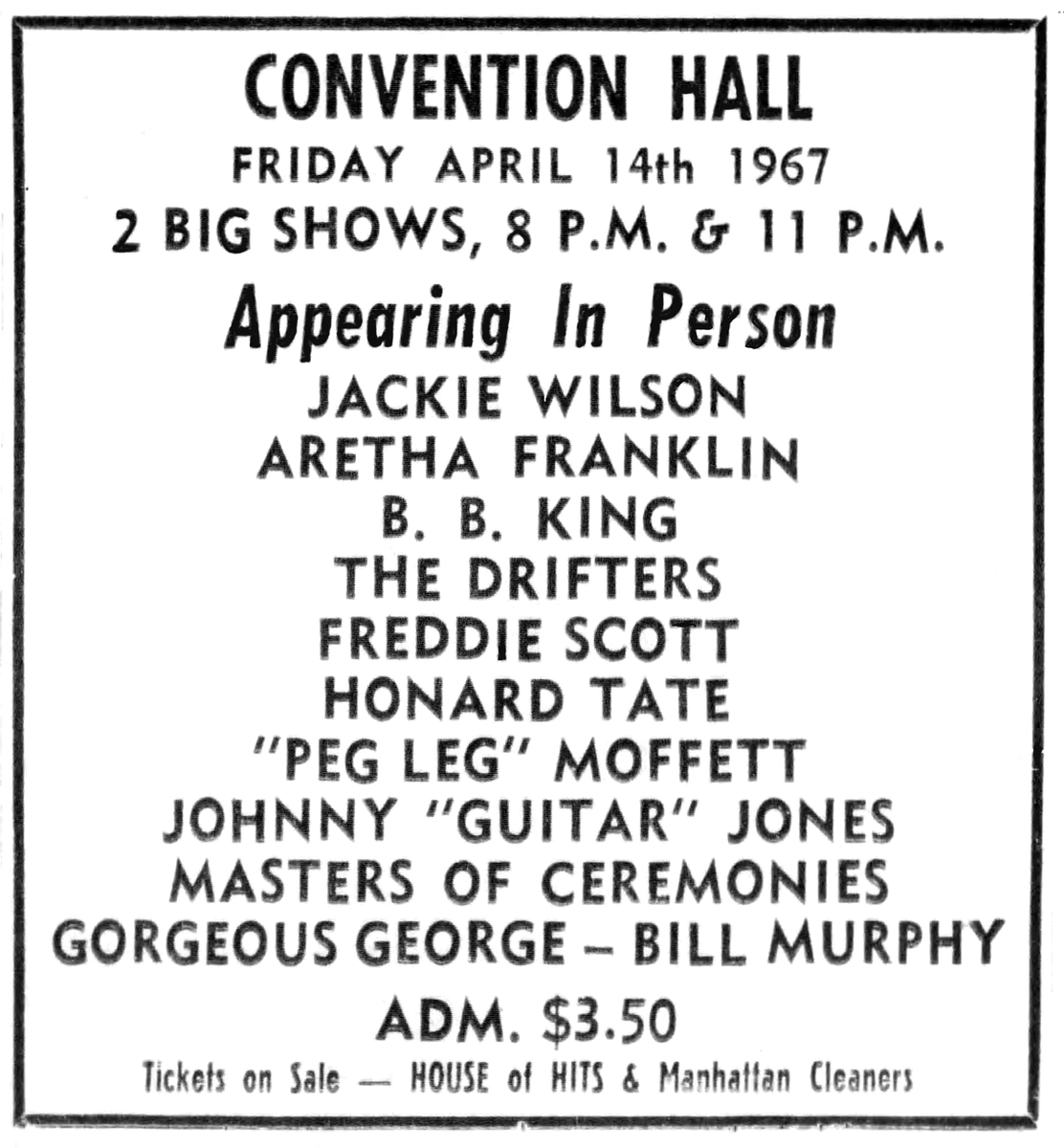
David Utz was one of the high school friends that skipped their last year. (That worked out ok — David earned a Ph.D. from Harvard. He and Robin eventually married.) David and I went to a package show at Kiel Auditorium (a.k.a. "Convention Hall") April 14, 1967, four days after Aretha's release of "Respect" as a single. Jackie Wilson was top-billed, then Aretha, then B.B. King, The Drifters, and others. I was so focused on Aretha that I didn't pay enough attention to the others. David and I were about the only white people there.
By spring of '67 it was obvious that Columbia wasn't about to become the new Berkeley. Our friends George and Lois Fox had already moved to the real Berkeley. We heard from them and the public press that the Bay Area was the place to be. Mark and I decided to transfer to San Francisco State College. My parents were still funding me and not pleased with my plan. Dad went to San Francisco to see for himself. Though not enthused, Mom and Dad acquiesced. Mark, Hobby, and I packed up our things and took the train to San Francisco.
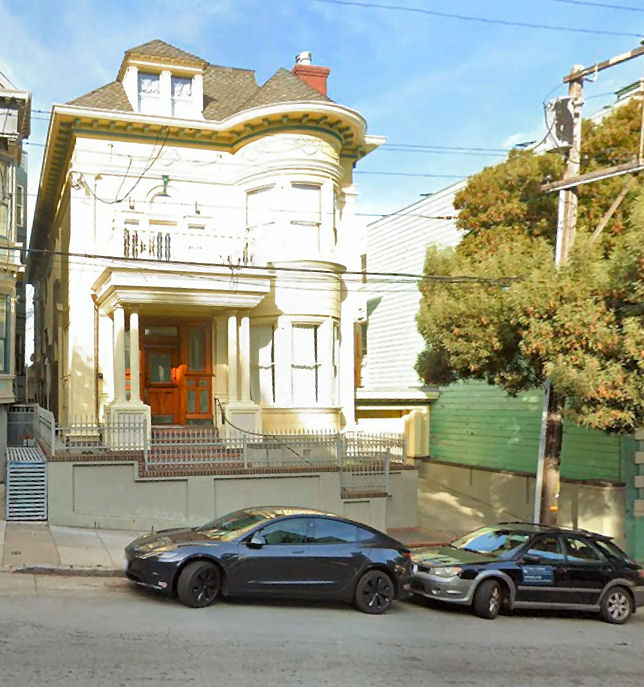
We stayed with George and Lois at first. I quickly rented a room on the top floor of a large communal house at 832 Fell St., near Fillmore. It wasn't the safest of neighborhoods, but I only got mugged once, and even then suffered no physical harm. I walked almost everywhere, including to the Muni stop on Market Street to take the Muni to campus.
I was unaware of the world of teas beyond the generic black teas at a grocery store. There was a half-pound tin of Twining's Lapsang Souchong in the communal kitchen. Though that began my exploration of many tea varieties and blends, once I acquired a taste for Lapsang, it became my favorite. I still drink multiple pots of Lapsang daily.
I still didn't have clarity about an academic path, but enrolled at SF State as a music major, with math as secondary. Something went awry with Mark's application to SF State, so he and Hobby went back to Columbia.
I had sent a postcard to Angela in Texas to tell her of my move. A few days later she and Carmen Ford were knocking at my door, telling me they and lots of other Austinites had moved to The City. Angela and many of the others, including several members of Mother Earth, were crammed into Minor Wilson's place on Beaver Street. Angela, Lewis Cowdrey, and Mary Ford moved into a pair of rooms down the hall from mine. All of a sudden I was meeting new friends from Texas: Al Strehli, Jimmie Gilmore, his then wife JoCarol, their daughter Elyse, Powell St. John, Jamie Howell, Tary Owens, Burton Wilson, ...
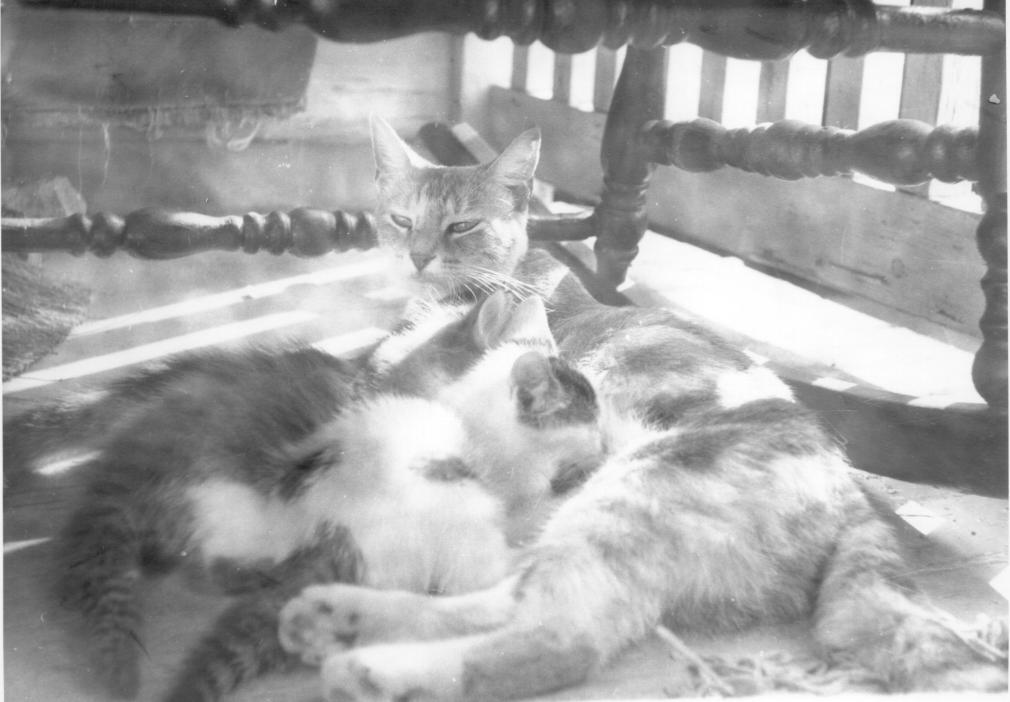
A friend down the hall told me of kittens that were available. The one I picked, "Johanna," named because of the Dylan song, became my first true cat companion. When the friend moved to North Beach, and I needed to go out of town, I would carry Johanna on my shoulder to his place for him to care for her with her litter-mate. Somehow she seemed safe and happy on the streets like that.
There were so many amazing musicians to listen to, at the Avalon, Fillmore, in Golden Gate Park, smaller city parks, Mount Tamalpais, ... I remember so many, but trying to list them is daunting.
Jamie, Tary, Pepi Plowman, Jackson ?, John Ike Walton, Stan Poytres, and a tenor player friend whose name I've forgotten formed Pure Funk. Jamie recruited me to be equipment manager and sound tech. One day, Tary was late to practice. Jamie told me to pick up Tary's bass, gave me some pointers and told me to fill-in until Tary arrived. Soon afterward I bought my first bass at a pawn shop, a used Magnatone that I then played for ten years. I taught myself to play bass, mostly playing along with records, particularly Louis Satterfield on Blues Is King. (That album also introduced me to Willie Nelson through B.B.'s rendition of "Night Life.")
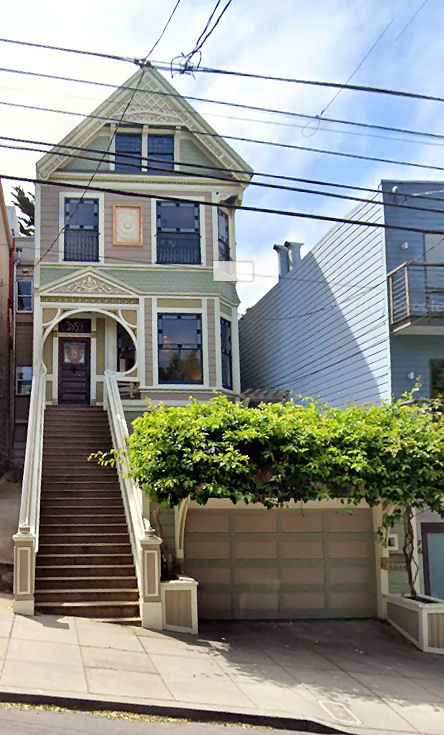
I bought my first car, a 1964 red VW Beetle. I moved to a much nicer house at 3859 21st Street that I shared with four other guys. (It had been built in 1903 and survived the 1906 earthquake.)
Jimmie asked me to accompany him on harmonica at the I/Thou coffee house on Haight Street. I was disappointed that I didn't get paid, but Jamie made me realize I should be grateful for the expierience.
I first met Jerry Barnett, Shiva's Headband drummer, when he and Bob Tom Reed (Shiva's guitarist) brought Bob Tom’s Twin Reverb to 21st for me to repair. Jerry and I would later become collaborators and life long friends.
Some of the music I remember seeing there: Big Brother and the Holding Company, Canned Heat, Mother Earth, James Cotton, Buddy Guy, Chuck Berry, Bo Diddley, Magic Sam, Junior Wells, Jimi Hendrix, Paul Butterfield, The Youngbloods, The Who, The Yardbirds (with Jimmy Page), Cream, Jeff Beck (with Rod Stewart and Ronnie Wood), Steve Miller with Boz Scaggs, Grateful Dead, Flatt & Scruggs, Flying Burrito Brothers, Arlo Guthrie, Flatt & Scruggs, Ramblin' Jack Elliott, The Doors, Donovan, Eric Burdon, Procol Harum, ... However, I regret that I did not at least try to get into Basin Street West when Otis Redding had a six day engagmment there in August 1967. I rationalized that it would be too hard to get in, too expensive, and that he was scheduled to play at the Fillmore soon after. When Otis died in the December plane crash, I already had a ticket to see him at the Fillmore.

After Pure Funk ended, Jamie and I started Champagne Delta. We rehearsed in the front room on 21st and started to play gigs, including one at the post-Bill Graham Fillmore Auditorium.
I was finally gaining a little academic enthusiasm with a few of my music and math courses. In the fall of 1968 I got to take a jazz improvization course taught by John Handy.
1968 also marked some difficult times. Dr. King was assassinated April 4. I was eagerly anticipating seeing Bobby Kennedy speak down Castro Street in mid-June but he was assassinated June 5. The SF State Strike started in November, ending my classes there. Christmas Eve I damaged my Beetle backing out of a parking place while leaving a party. The next morning, Jamie called to say there had been a fire at the flat where he and Heidi lived. While I was there helping them, we got word that our band manager, Walter, had been shot. None of those turned out as bad as they could have: the Beetle was reparable, Jamie and Heidi didn't lose much to the fire and didn't need to move, and Walter's wounds weren't life threatening. But ...
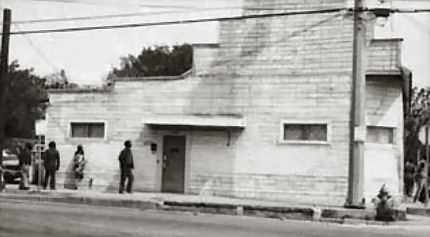
In addition to getting us gigs, Walter rented equipment for us — Hammond organ, a Fender Leslie cabinet so that Jamie could better mimic Buddy Guy's sound on Hoodoo Man Blues, a Fender Jazz bass and amp for me, etc. Without Walter's efforts and investment, Champagne Delta didn't make sense. Jamie and I cast about for new options, but nothing fit. A new friend visiting from Austin suggested I visit Austin, so I spent 10 days in Austin in February. Seeing the Fugs and Shiva's Head Band at the Vulcan Gas Company (VGC), being asked to sit in with the house band at the I.L. Club, and swimming in Hamilton Pool, attracted me more than enough to come back that April for what I expected to be an extended visit[3].
Leaving San Francisco, I loaded most of my stuff into the back of my 64 Beetle. Johanna and her fresh litter of kittens were on top of my Fender Twin and white Magnatone bass. I stopped overnight in L.A. and Albuquerque. The weekend before I arrived, Muddy Waters had been at VGC, with Angela and Lewis second billed.
Soon thereafter, Angela suggested to Houston White that I could manage the sound system at the Vulcan. Sandy Lockett explained the peculiarities of the VGC installation and I took over. I loved the sound work, acting as D.J. between sets with Nashville Skyline, The Gilded Palace of Sin and other recent releases. I got to hear and meet wonderful musicians: Marc Benno, Doyle Bramhall, John Carrick, John Clay, Denny Freeman, Paul Ray, Jimmie Vaughan, and others not well known at the time.
I had an infamous draft physical in San Antonio where I used every strategy I could think of to get Selective Service to disqualify me, which they eventually did.
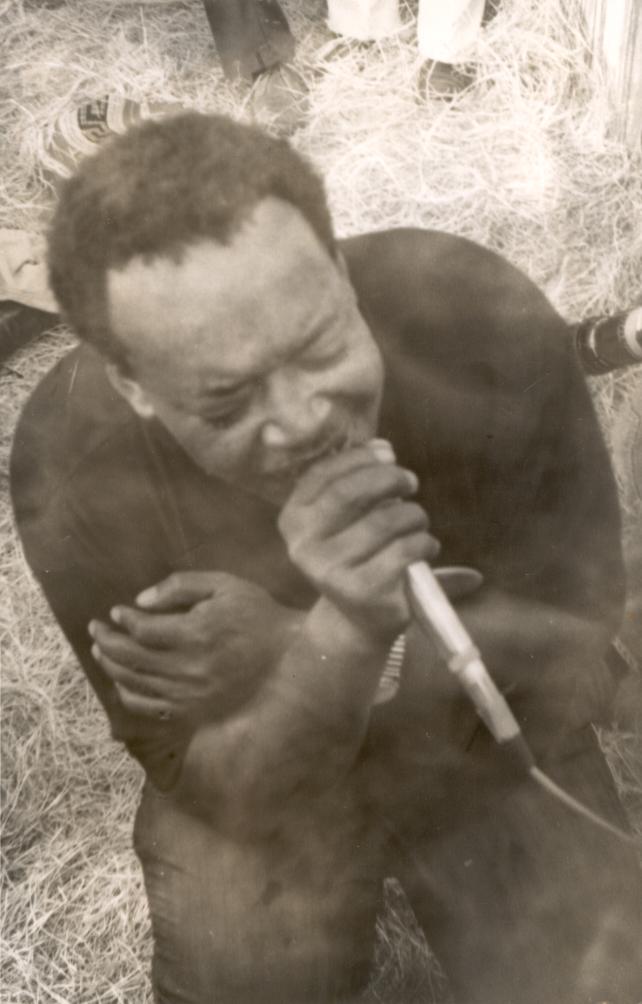
When I was a child developing photos, I was always frustrated by lack of an enlarger — I now could access the Student Union darkroom and use the Omega there. I got up close to James Cotton, Janis Joplin, and B.B. King and took photos at the edge of the stage at the Texas International Pop Festival.
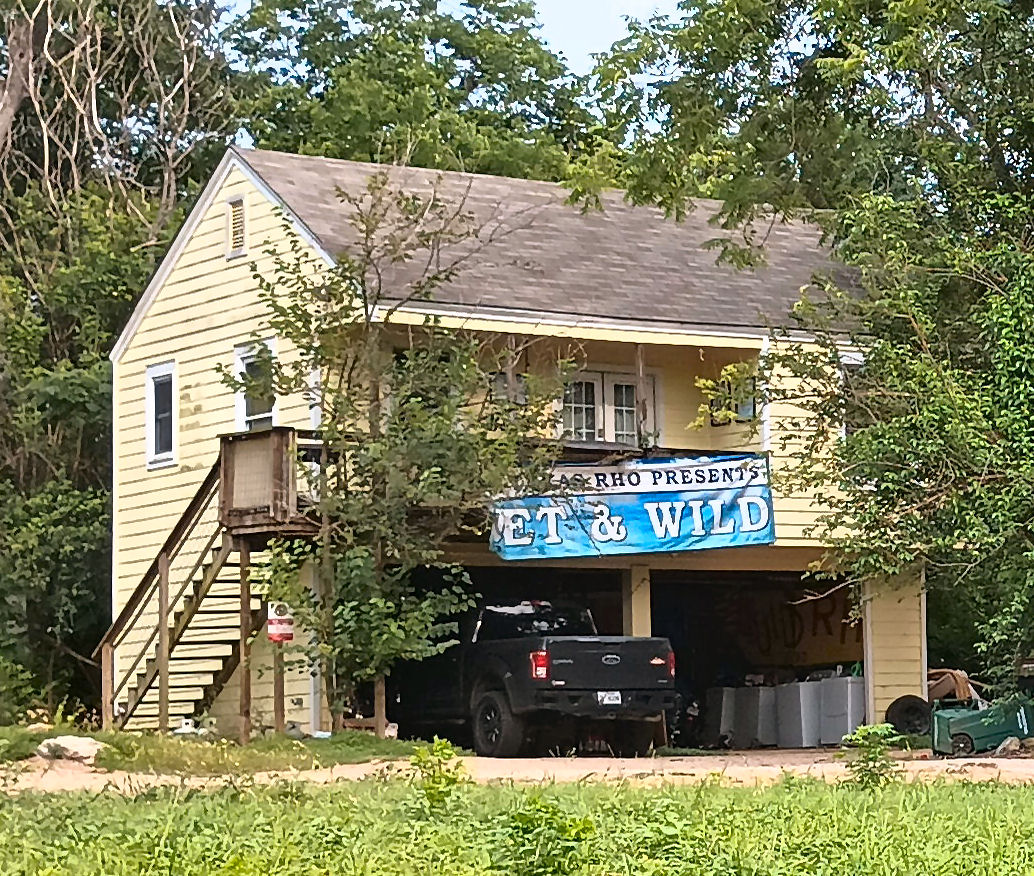
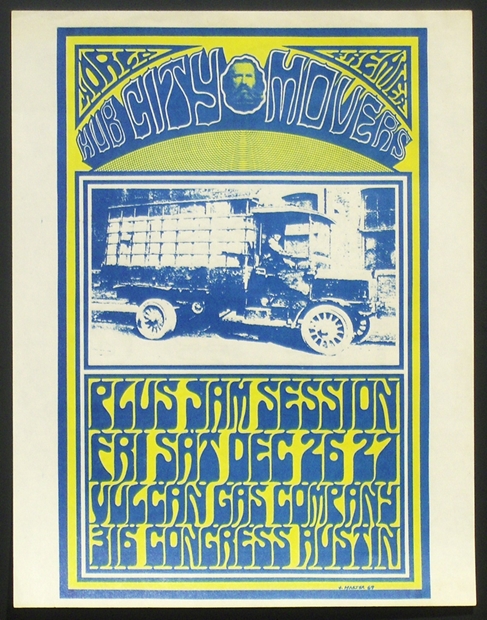

The quartet version of Shiva's was amazing. I felt privileged to enjoy their improvisations so many nights. When Jerry Barnett left Shiva’s and suggested we try to form a band and collaborate on his vision of “Hotchet Electronics,” I was delighted. Jerry recruited Ed Vizard to join us on tenor. I recruited Jimmie Gilmore. Jimmie had long thought the name of a Lubbock company, “Hub City Movers,” would be a great band name. Stan Poytres joined us on guitar and neighbor Stuart Ervin joined us on guitar and keyboards. We mostly rehearsed in the garage under my apartment. The Hub City Movers tried a “battle of the bands” at City Coliseum, played at the I.L. Club a few times, and finally wrangled a booking at VGC at the end of the year. We focused on Al Strehli songs, songs Ed and Jimmie had written, early Elvis songs, obscure Dylan songs, etc. Early on, Jerry started talking to me about setting "Set My Chickens Free" by Gilbert Shelton to music. I suggested he start as a "talking blues" in the style of Woody Guthrie — that seemed to fit with the comic's words. We followed with a vocal chorus by the band, clucking sounds and noisemakers in the style of Spike Jones.
Barry Underhill's film The Vulcan Gas Company: A Cultural Utility was released June 15, 2026 at https://www.pbs.org/video/vulcan-gas-company-g3h6gs/. Some of the soundtrack is based on my tapes and Hub City Mover recordings — the opening Johnny Winter "Help Me" is one of my recordings. I first show up on camera at about 23:40. The trailer is at https://vimeo.com/1120606809 -- I'm not in the trailer.
Back to Top
Copyright © 1995-2026 Charles H. Sauer. All rights reserved.